
Timelines PowerPoint Diagrams
Formerly known as timelines PowerPoint diagram templates - this collection now includes horizontal timelines, vertical milestone flows, Gantt-style roadmaps, and project phase diagrams built specifically for PowerPoint.
These timeline PowerPoint templates are designed for project managers presenting delivery schedules, consultants mapping strategic phases, and marketing leads walking stakeholders through campaign rollouts. Instead of spending 40 minutes aligning shapes and connectors in a blank slide, you open a layout that already handles the visual logic - date markers, phase labels, milestone nodes - and replace the placeholder text with your actual data. Every template in this category is fully editable in PowerPoint, with grouped objects and consistent color variables so your rebrand takes minutes, not hours.
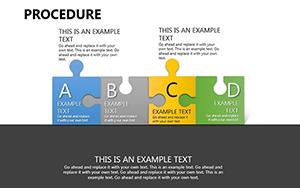 (908)
(908) Procedure PowerPoint Diagrams Template: Simplify the ComplexID: #PD00192$20.00
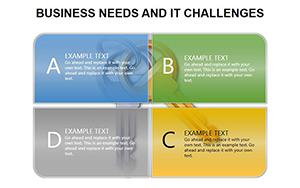 (1022)
 Mastering IT Challenges and Business Needs with Professional PowerPoint DiagramsID: #PD00190$15.00
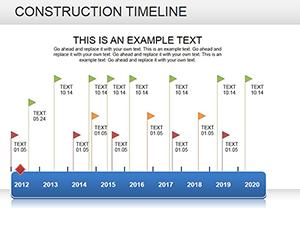 (961)
(961) Construction Timeline PowerPoint diagramID: #PD00175$23.00
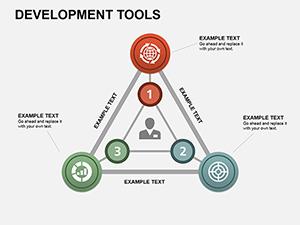 (1196)
 Development Tools PowerPoint Diagrams: Streamline Your Project VisionsID: #PD00153$18.00
 (1106)
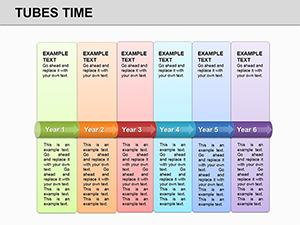
Timeline PowerPoint Template - 11 Fully Editable Slides | Instant Download | ImagineLayoutID: #PD00148$15.00
(1106)
Timeline PowerPoint Template - 11 Fully Editable Slides | Instant Download | ImagineLayoutID: #PD00148$15.00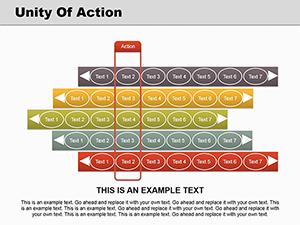 (981)
Unlock Sequence Mastery with Unity of Action PowerPoint DiagramsID: #PD00147$20.00
(981)
Unlock Sequence Mastery with Unity of Action PowerPoint DiagramsID: #PD00147$20.00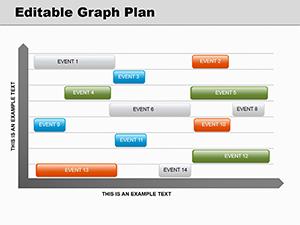 (1123)
Fully Editable Project Schedule Gantt Chart & Timeline PowerPoint Template - 8 Slides | Instant DownloadID: #PD00144$14.00
(1123)
Fully Editable Project Schedule Gantt Chart & Timeline PowerPoint Template - 8 Slides | Instant DownloadID: #PD00144$14.00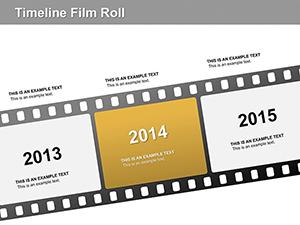 (815)
Timeline Film Roll PowerPoint Diagram TemplateID: #PD00124$22.00
(815)
Timeline Film Roll PowerPoint Diagram TemplateID: #PD00124$22.00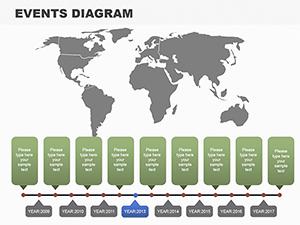 (967)
Events PowerPoint Diagrams: Elevate Your Next Conference or WorkshopID: #PD00095$18.00
(967)
Events PowerPoint Diagrams: Elevate Your Next Conference or WorkshopID: #PD00095$18.00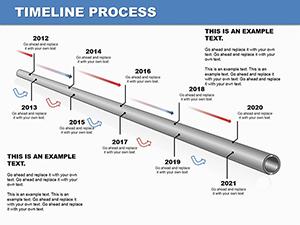 (658)
Timeline Process Diagrams - Editable PPTX | ImagineLayoutID: #PD00052$24.00
(658)
Timeline Process Diagrams - Editable PPTX | ImagineLayoutID: #PD00052$24.00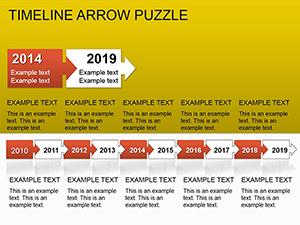 (273)
Timeline Arrow Puzzle PowerPoint DiagramsID: #PD00027$18.00
(273)
Timeline Arrow Puzzle PowerPoint DiagramsID: #PD00027$18.00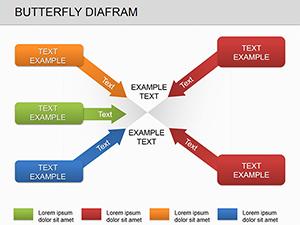 (1054)
Butterfly PowerPoint Diagrams TemplateID: #PD00016$18.00
(1054)
Butterfly PowerPoint Diagrams TemplateID: #PD00016$18.00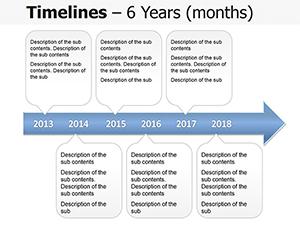 (304)
Project Timeline Planning PowerPoint SlidesID: #PD00002$20.00
(304)
Project Timeline Planning PowerPoint SlidesID: #PD00002$20.00
When to Use a Timeline Template Instead of Building from Scratch
Most presenters reach for a blank slide and start dragging shapes the moment they need to show a sequence of events. The result is a slide that technically communicates the information but rarely holds the room - uneven spacing, misaligned connectors, inconsistent font sizes across date labels. A pre-built timeline PowerPoint template solves this structurally. The visual hierarchy is already decided: where milestones sit, how phase labels relate to date markers, how much breathing room exists between nodes. Your job becomes content, not layout math.
For quarterly business reviews, investor decks, or program kickoffs, the difference between a hand-built timeline and a properly designed one is visible in the first three seconds. Stakeholders read structure before they read words. A clean, spatially consistent timeline signals that the presenter has command of the material - which is exactly the impression you need when the CFO or a new client is in the room.
The templates in this category are also more practical for iterative work. When a project milestone shifts - and it always does - you adjust one grouped object rather than realigning six separate shapes. That alone saves meaningful time across a project's lifecycle.
Use Cases: Who Uses These Templates and When
Understanding the right context for a timeline slide helps you choose the layout that fits your scenario rather than forcing a generic design into a specific business need.
Project Managers - Construction and Engineering Firms
A project manager at a mid-size engineering firm presenting a 12-month infrastructure build to a municipal client needs a timeline that shows phases (design, permitting, groundwork, completion) with clear dependencies. Gantt-style and phase-bar timeline layouts from this collection handle exactly that scenario. The client can follow the delivery logic without needing a project management background.
Strategy Consultants - Transformation Roadmaps
A management consultant presenting a three-year digital transformation roadmap to a C-suite audience needs a timeline that communicates strategic sequence without looking like a project tracking tool. Horizontal milestone timelines with phase color-coding and executive summary labels are the right format here. The goal is to show direction and decision points, not task-level granularity.
Marketing Directors - Campaign Timelines and Launch Plans
A marketing director presenting a product launch plan to the leadership team needs a timeline that maps activities (pre-launch, launch week, post-launch amplification) against calendar dates. A clean horizontal timeline with activity swim lanes and date anchors communicates the plan clearly without requiring the audience to read a Gantt chart. Several layouts in this category are built precisely for this scenario.
HR and L&D Teams - Onboarding and Training Program Timelines
An HR lead presenting a new employee onboarding journey or a learning and development manager outlining a six-week training program benefits from a vertical or stepped timeline layout that shows progression through stages. These layouts reinforce the structured nature of the program and are visually approachable for audiences who aren't used to reading project plans.
Startup Founders - Investor Pitch Roadmaps
A founder presenting a Series A pitch deck needs a future milestones timeline that shows product development stages, go-to-market activities, and funding deployment in a format that reads quickly and looks deliberate. Investors see dozens of roadmap slides; a well-designed timeline layout immediately separates a polished deck from a DIY one.
Timeline Templates vs. Building in Default PowerPoint
PowerPoint's built-in SmartArt timeline options are functional but visually dated. The color palettes default to Microsoft's standard theme colors, the spacing is fixed and hard to adjust without breaking the layout, and the font options are constrained by the SmartArt container. More importantly, SmartArt objects don't give you the fine-grained control over individual elements that a real presentation design requires.
When you use a pre-built timeline template from this collection, you're working with regular PowerPoint objects - grouped shapes, text boxes, and connector lines - that you can adjust independently. Want to stretch one phase bar to reflect a longer delivery window? You move one object. Want to add a callout note to a specific milestone? You drop a text box next to the node. This level of control is simply not available in SmartArt.
Beyond editability, there's the question of visual quality. SmartArt produces slides that look like SmartArt. Experienced audiences - board members, investors, senior clients - recognize the default aesthetic immediately. The templates in this category are designed to look like something a presentation specialist built, not something assembled from default shapes in a 20-minute rush.
There's also a consistency argument. If your deck has eight slides and one of them is a SmartArt timeline while the rest use custom layouts, the timeline slide stands out for the wrong reason. A properly designed timeline template matches the visual register of the surrounding slides, whether that's corporate blue-and-white or a bold brand color palette.
Finally, pre-built templates reduce cognitive load during preparation. When you're finalizing a presentation at 10pm before a 9am board meeting, having a layout that already works - and that you only need to populate with your data - is genuinely valuable. That's not a minor convenience; it's the difference between presenting a polished deck and presenting a rushed one.
Best Practices for Using Timeline Templates in PowerPoint
Getting the most from a timeline template requires more than swapping placeholder text. A few practices will help you produce slides that look intentional rather than templated.
Match the Timeline Format to the Information Type
Horizontal timelines work best for calendar-based sequences where the x-axis represents time flowing left to right. Vertical timelines work better for process flows where each stage leads to the next in a top-down sequence. Gantt-style layouts are appropriate when you need to show overlapping phases. Choosing the wrong format for your data creates visual friction even when the data itself is correct - so select the layout type before you start populating it.
Limit the Number of Milestones Per Slide
A timeline slide with 15 milestones is rarely readable in a live presentation. Aim for five to eight nodes maximum on a single slide. If your project has more phases than that, consider splitting the timeline into two slides or using a summary timeline on slide one and detailed phase timelines as supporting slides. The summary view keeps the audience oriented; the detail slides answer follow-up questions.
Use Color Purposefully, Not Decoratively
Most timeline templates use color to differentiate phases or highlight a specific milestone. Resist the urge to assign unique colors to every node - this creates visual noise rather than clarity. Use one color for completed phases, one for in-progress, and one for upcoming. If your company has a brand palette, map the template colors to your brand variables before adding content. This takes five minutes and makes the slide look native to your organization rather than borrowed from a template library.
Technical Tip: Unlock Groups Before Editing
Most timeline templates in PowerPoint use grouped objects to keep elements aligned. Before editing individual components - adjusting a phase bar width, moving a milestone node - right-click the group and select "Ungroup" or use the Selection Pane (View → Selection Pane) to select individual objects within the group without ungrouping everything. This preserves the overall structure while letting you make precise adjustments. Re-group after editing to keep alignment intact for future moves.
Why ImagineLayout's Timeline Templates Are Different
Most template marketplaces offer timeline slides as a subset of a larger bundle - you download a 150-slide mega-pack and find three or four timeline layouts buried inside. ImagineLayout structures its timeline collection as a dedicated category, which means every design in this section was created specifically for timeline use cases, not repurposed from a general-purpose slide library.
The layouts here reflect real presentation contexts: executive roadmaps that need to work in a boardroom setting, project timelines that need to hold up on a shared screen in a Zoom call, pitch deck roadmaps that need to convey ambition without looking cluttered. Each layout is tested at actual presentation dimensions (16:9 widescreen) and is designed to remain legible when projected, not just when viewed at 100% zoom on a design screen.
Compared to platforms like Slidesgo or SlideTeam, which prioritize volume over specificity, ImagineLayout's timeline collection prioritizes layout precision and editing practicality. The file structures are clean, the object layers are logically named, and the color systems use consistent variables so rebranding is straightforward. You get fewer templates overall, but each one is more immediately usable for a specific professional scenario.
Browse the timeline templates below, select the layout that matches your presentation context, and download the file ready to edit in PowerPoint. If you're working across multiple presentations, consider downloading two or three formats - the horizontal roadmap, the vertical process flow, and the Gantt-style layout - so you have the right tool for each scenario as it arises.
Frequently Asked Questions
Are these timeline templates fully editable in PowerPoint?
Yes. Every timeline template in this collection is delivered as a native .pptx file and is fully editable in PowerPoint 2016 and later, including Microsoft 365. All text, shapes, colors, and layout elements can be modified directly without any plugins or additional software. The templates use standard PowerPoint objects - grouped shapes, text boxes, and connectors - rather than embedded images or locked elements, so you have complete control over every component of the design.
Can I use these templates with Google Slides?
The templates are designed and optimized for PowerPoint. You can import a .pptx file into Google Slides, and most elements will transfer correctly, but some font rendering and precise object positioning may shift slightly depending on your Google Slides settings. For best results and full design fidelity, use the templates in PowerPoint or PowerPoint-compatible software such as LibreOffice Impress. If Google Slides is your primary tool, check the import preview carefully before finalizing your presentation.
What license comes with each download?
Each template download includes a commercial use license, which means you can use the designs in client presentations, internal business decks, investor pitches, and other professional contexts. The license does not permit reselling the templates, distributing the files to third parties, or incorporating the designs into template products you sell to others. Review the full license terms on the product page before downloading if you have a specific redistribution or white-label use case in mind.
How many milestone nodes or phases can I add to a timeline slide?
The number of nodes you can add depends on the specific template layout. Most horizontal timeline templates are designed for five to eight milestones at standard 16:9 dimensions while maintaining readability in a projected setting. You can add additional nodes by duplicating existing milestone objects and adjusting spacing, but keep in mind that timelines with more than ten items on a single slide typically lose legibility at presentation distance. If your project has many phases, consider using two slides - one summary timeline and one detailed breakdown - which several layouts in this collection are specifically designed to support.
Do the templates include animated versions?
Selected templates in this collection include PowerPoint animation sequences - typically entrance animations that reveal milestones progressively, which is effective for live presentations where you want to walk the audience through a timeline step by step. The animation settings are fully editable in PowerPoint's Animation Pane, so you can adjust timing, sequence order, and effect type to match your presentation pace. Static (non-animated) versions are also included with most animated templates so you have a clean export option for PDF sharing or printed handouts.


