
Puzzles PowerPoint Diagrams
Puzzle PowerPoint diagram templates give you pre-built layouts that illustrate how separate elements connect into one cohesive story. A strategy consultant mapping a merger integration or a product manager outlining feature dependencies can open the file and immediately focus on content instead of alignment.
An operations director facing a tight deadline for the quarterly review reaches for these when bullet lists would bury the logic. The interlocking pieces already guide the eye from problem to solution, so the deck tells the story before the first word is spoken.
This collection focuses on interconnected relationships. Download any file and replace the placeholder text; the structure stays intact across every slide.
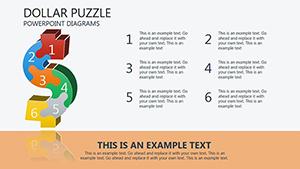 (43)
(43) 3D Dollar Puzzle PowerPoint Diagrams: Financial PPTXID: #PD00094$16.00
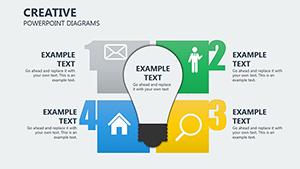 (29)
(29) Creative PowerPoint Diagrams: Puzzles of PossibilityID: #PD00202$22.00
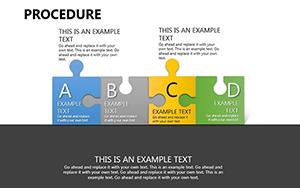 (908)
Procedure PowerPoint Diagrams Template: Simplify the ComplexID: #PD00192$20.00
(908)
Procedure PowerPoint Diagrams Template: Simplify the ComplexID: #PD00192$20.00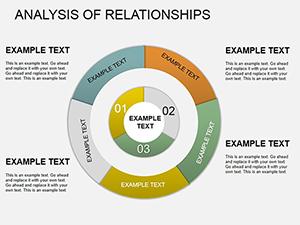 (610)
Master Connections: Relationship Analysis PowerPoint DiagramsID: #PD00159$25.00
(610)
Master Connections: Relationship Analysis PowerPoint DiagramsID: #PD00159$25.00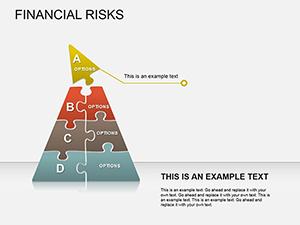 (880)
(880) Financial Risks PowerPoint Diagrams Template: Download PPTXID: #PD00155$24.00
 (910)
Partnership PowerPoint Diagrams: Visualize Synergies with PuzzlesID: #PD00151$20.00
(910)
Partnership PowerPoint Diagrams: Visualize Synergies with PuzzlesID: #PD00151$20.00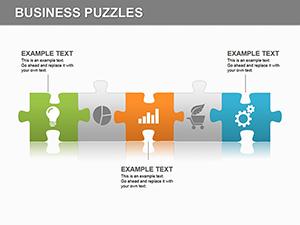 (59)
Puzzle Work PowerPoint Diagrams: Piece Together Success in Your PresentationsID: #PD00134$22.00
(59)
Puzzle Work PowerPoint Diagrams: Piece Together Success in Your PresentationsID: #PD00134$22.00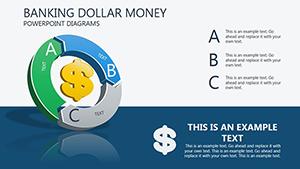 (973)
(973) Banking Dollar Money PowerPoint diagramID: #PD00088$16.00
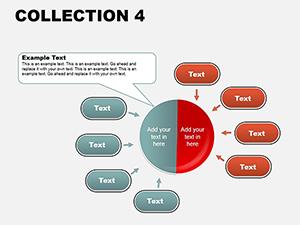 (534)
PowerPoint Diagrams Collection: Weaving Data into NarrativesID: #PD00063$18.00
(534)
PowerPoint Diagrams Collection: Weaving Data into NarrativesID: #PD00063$18.00 (672)
World Maps PowerPoint Template for ProsID: #PD00061$16.00
(672)
World Maps PowerPoint Template for ProsID: #PD00061$16.00 (6)
Fully Editable Cycle, Pyramid, Arrow, Pie & Puzzle PowerPoint Diagram Templates - 11 Slides | Instant DownloadID: #PD00059$12.00
(6)
Fully Editable Cycle, Pyramid, Arrow, Pie & Puzzle PowerPoint Diagram Templates - 11 Slides | Instant DownloadID: #PD00059$12.00 (291)
2D Puzzles PowerPoint Template: Unlock Creative ConnectionsID: #PD00054$24.00
(291)
2D Puzzles PowerPoint Template: Unlock Creative ConnectionsID: #PD00054$24.00 (114)
Blue Puzzle PowerPoint Diagrams: Assemble Insights That FitID: #PD00047$24.00
(114)
Blue Puzzle PowerPoint Diagrams: Assemble Insights That FitID: #PD00047$24.00 (160)
Honeycomb PowerPoint Diagrams - Editable PPTX | ImagineLayoutID: #PD00038$18.00
(160)
Honeycomb PowerPoint Diagrams - Editable PPTX | ImagineLayoutID: #PD00038$18.00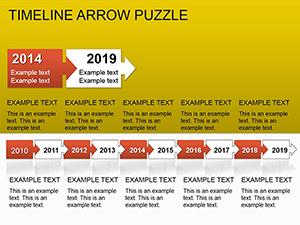 (273)
Timeline Arrow Puzzle PowerPoint DiagramsID: #PD00027$18.00
(273)
Timeline Arrow Puzzle PowerPoint DiagramsID: #PD00027$18.00
How puzzle diagrams turn abstract strategies into concrete visuals
Most business concepts exist as lists or paragraphs until someone draws the connections. Puzzle diagrams force those connections into view with interlocking shapes that show dependencies, sequences, and outcomes at a glance. The layout itself becomes part of the argument.
The decisions you skip when you start with a ready puzzle layout
Without templates you decide which shapes represent each step, how many pieces fit on one slide, and how the color progression signals priority. Then you align every edge across twenty slides. These files remove those choices so the project manager spends the hour on data, not geometry.
Four real business moments where puzzle visuals outperform bullet lists
A management consultant presents post-merger integration to the executive team. The four-piece puzzle already shows culture, systems, people, and processes snapping together; she swaps labels and the room sees the full picture before she advances to the next slide.
A product owner maps the customer journey for a cross-functional workshop. Each puzzle segment represents a touchpoint; the team moves pieces around live in the meeting, testing scenarios without redrawing anything.
A finance director explains risk allocation across business units. The overlapping puzzle layers show shared exposure; stakeholders immediately spot where one unit`s decision affects another.
An HR business partner rolls out a new competency framework. The puzzle diagram places skills at the center and roles around the edge; managers see exactly how training investments fit the bigger organizational picture.
Practical workflow advice for large team decks
When multiple departments contribute to the same annual strategy deck, keep one master puzzle template open. Each contributor edits their assigned slide; because the slide master controls the piece outlines and colors, the final deck looks unified even after thirty hands have touched it.
A technical note on editing puzzle shapes in PowerPoint
Select any puzzle piece, right-click, and choose Edit Points to adjust the interlocking tabs without losing the overall shape. This keeps the visual connection intact even when you stretch the piece to fit longer text. Save the edited shape as a new default for future slides in the same deck.
What makes this puzzles collection stand out
The designs prioritize clarity over decoration. Every piece is fully vector and recolorable through theme colors. There are no forced animations or decorative borders; the focus is on letting the audience see how the parts create the whole.
If your next deck needs broader process flows, check our general PowerPoint diagram templates. For data visualization alongside puzzles, the PowerPoint chart templates offer matching styles. Teams using Apple devices can explore Keynote templates.
Open the template that matches your current project and begin editing.
Frequently Asked Questions
Are these puzzles PowerPoint diagram templates compatible with older versions of Microsoft PowerPoint?
The templates are saved in PPTX format and tested to open cleanly in PowerPoint 2013 and all newer versions including Microsoft 365. In older 2010 versions, some advanced shape effects or custom animations may need manual adjustment, but the core editable diagrams and slide master layouts remain fully functional. If you encounter any rendering issue with puzzle tabs, simply select the group and reset the shape styles using the format tab. Most users on corporate machines report zero changes needed.
Can I share these puzzle templates with my team or use them for client presentations?
The license included with every download permits unlimited editing and use in both internal company presentations and external client deliverables. There is no limit on the number of users within your organization, and you can distribute the edited decks as PDF exports or live presentations without additional fees. The only restriction is against reselling the original template files themselves as standalone products. This setup works for consulting firms and internal strategy teams alike.
Do the templates support 16:9 aspect ratio, and what happens if I need to switch to 4:3?
All templates are designed in the standard 16:9 widescreen format that matches modern projectors and screens. To change to 4:3, go to Design tab, Slide Size, and select the option; the slide master will scale most elements proportionally because shapes are vector-based. For any text overflow in puzzle segments, simply adjust the font size or column widths using the built-in placeholders. The change takes under thirty seconds and preserves the visual hierarchy.
Will the diagrams work if I export the presentation to Google Slides?
While native editing is optimized for PowerPoint, you can upload the PPTX file to Google Slides and the basic shapes, text, and colors will transfer accurately. Complex grouped objects or custom puzzle tabs may require minor regrouping after import. For best results, finalize edits in PowerPoint before exporting to PDF for sharing via Google Drive. The embedded fonts remain intact in the PDF route.
How do I update colors across the entire deck using the slide master?
Open the template, go to View > Slide Master, and modify the color scheme or theme colors at the top level. Because every diagram uses theme colors rather than hard-coded fills, your changes apply instantly to all slides and all placeholders. This is especially useful for branding updates across multiple presentations. The process takes one minute and keeps every puzzle piece consistent.


