
Business Word templates
The business Word templates collection includes layouts for reports, proposals, contracts, and other essential documents. These provide consistent formatting for sections like executive summaries, data tables, and recommendations.
They target analysts, managers, and consultants who prepare materials for internal reviews or external client interactions.
Opt for these templates rather than a new blank file when the document must convey complex information clearly under tight deadlines. An example is a strategy consultant building a project proposal for a potential client; the template organizes scope, timeline, and budget details into readable sections.
Explore the available options and customize the one closest to your document type.
 (1112)
 Precious Metals Banking Word Template: Fortress for Your AssetsID: #WT01504$8.00
 (489)
Graphical Analysis of Prices Word Template: Master Market InsightsID: #WT01501$12.00
(489)
Graphical Analysis of Prices Word Template: Master Market InsightsID: #WT01501$12.00 (669)
(669) Business Time Word Template: Organize for Peak ProductivityID: #WT01500$12.00
 (27)
(27) Value Home Word Template: Design Your Ideal Living SpaceID: #WT01498$10.00
 (281)
4-Page Financial Roadmap Word Template | ImagineLayoutID: #WT01495$8.00
(281)
4-Page Financial Roadmap Word Template | ImagineLayoutID: #WT01495$8.00 (385)
Dollars Money Sorting Word templateID: #WT01494$8.00
(385)
Dollars Money Sorting Word templateID: #WT01494$8.00 (947)
Dollars Money Word Template: Craft Compelling Financial NarrativesID: #WT01493$8.00
(947)
Dollars Money Word Template: Craft Compelling Financial NarrativesID: #WT01493$8.00 (479)
Financial Analysis Word TemplateID: #WT01469$8.00
(479)
Financial Analysis Word TemplateID: #WT01469$8.00 (608)
Evaluation Quality Capital Management Word Template: Build Solid FoundationsID: #WT01449$8.00
(608)
Evaluation Quality Capital Management Word Template: Build Solid FoundationsID: #WT01449$8.00 (63)
Search for New Markets Word TemplateID: #WT01447$12.00
(63)
Search for New Markets Word TemplateID: #WT01447$12.00 (771)
Market Research Word TemplateID: #WT01446$12.00
(771)
Market Research Word TemplateID: #WT01446$12.00 (782)
Development Bank Word TemplateID: #WT01444$12.00
(782)
Development Bank Word TemplateID: #WT01444$12.00 (592)
Associate Analyst Word TemplatesID: #WT01406$12.00
(592)
Associate Analyst Word TemplatesID: #WT01406$12.00 (993)
World Economy Word Template: Chart the Global Financial LandscapeID: #WT01393$10.00
(993)
World Economy Word Template: Chart the Global Financial LandscapeID: #WT01393$10.00 (831)
(831) E-Commerce Organization Word TemplateID: #WT01205$8.00
 (857)
3D USA Map & Flag Word Template: Depth in Every DetailID: #WT01071$10.00
(857)
3D USA Map & Flag Word Template: Depth in Every DetailID: #WT01071$10.00 (482)
Mission Goals Word TemplatesID: #WT01060$8.00
(482)
Mission Goals Word TemplatesID: #WT01060$8.00 (908)
Workflow in Business Word TemplateID: #WT01058$12.00
(908)
Workflow in Business Word TemplateID: #WT01058$12.00 (679)
Information Business Word Template: Craft Documents That Drive DecisionsID: #WT01035$10.00
(679)
Information Business Word Template: Craft Documents That Drive DecisionsID: #WT01035$10.00 (773)
Contactee Word Template with 5 Starter Pages | ImagineLayoutID: #WT00982$8.00
(773)
Contactee Word Template with 5 Starter Pages | ImagineLayoutID: #WT00982$8.00 (631)
Businessman Talking on the Phone Word Templates: Sharpen Your Call StrategiesID: #WT00970$14.00
(631)
Businessman Talking on the Phone Word Templates: Sharpen Your Call StrategiesID: #WT00970$14.00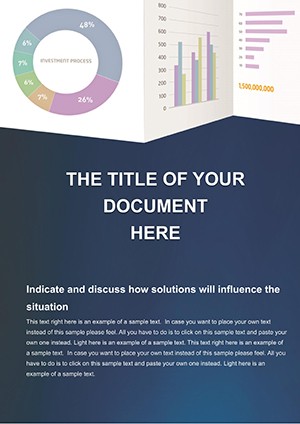 (611)
Diagrams for Business Word Template: Illustrate Results with PrecisionID: #WT00958$14.00
(611)
Diagrams for Business Word Template: Illustrate Results with PrecisionID: #WT00958$14.00 (1164)
Winter Discounts Word Template: Spark Holiday Sales with Professional PolishID: #WT00923$10.00
(1164)
Winter Discounts Word Template: Spark Holiday Sales with Professional PolishID: #WT00923$10.00 (46)
Christmas Discounts Word Template: Deck Your Sales Docs with Holiday MagicID: #WT00922$10.00
(46)
Christmas Discounts Word Template: Deck Your Sales Docs with Holiday MagicID: #WT00922$10.00 (87)
Discounts Word Template: Power Up Your Sales Pitches with PrecisionID: #WT00921$14.00
(87)
Discounts Word Template: Power Up Your Sales Pitches with PrecisionID: #WT00921$14.00 (572)
Stepping Up to Success Word Template: Ascend Your Document GameID: #WT00916$8.00
(572)
Stepping Up to Success Word Template: Ascend Your Document GameID: #WT00916$8.00 (698)
First Place Word Template Backgrounds: Secure the Spotlight in Your DocsID: #WT00837$10.00
(698)
First Place Word Template Backgrounds: Secure the Spotlight in Your DocsID: #WT00837$10.00 (328)
Key Land Homes Word Template: Locking in Security for Your Business DocsID: #WT00836$14.00
(328)
Key Land Homes Word Template: Locking in Security for Your Business DocsID: #WT00836$14.00 (228)
Project Analyst Word Template: Streamline Financial DocsID: #WT00833$12.00
(228)
Project Analyst Word Template: Streamline Financial DocsID: #WT00833$12.00 (687)
Business Trend Analysis Word Template: Insightful ReportsID: #WT00832$8.00
(687)
Business Trend Analysis Word Template: Insightful ReportsID: #WT00832$8.00 (268)
Bio Green Planet Word Template: Eco-Friendly DesignsID: #WT00831$10.00
(268)
Bio Green Planet Word Template: Eco-Friendly DesignsID: #WT00831$10.00 (350)
Business Growth Strategies Word Template: Charting Paths to ExpansionID: #WT00823$10.00
(350)
Business Growth Strategies Word Template: Charting Paths to ExpansionID: #WT00823$10.00 (1191)
Top Business Leaders Word Template: Profiling Icons of InfluenceID: #WT00822$14.00
(1191)
Top Business Leaders Word Template: Profiling Icons of InfluenceID: #WT00822$14.00
Use Cases
Management consultants prepare client proposals using these templates to outline project scope, timelines, team roles, and pricing models. The structure keeps all elements in logical order for decision makers in target companies.
Corporate finance teams create quarterly performance reports for board meetings. Sections for financial metrics, variance analysis, and forward-looking statements help present information to executives and stakeholders.
HR directors develop policy updates or employee handbooks that cover benefits, procedures, and compliance requirements. The templates allow for clear organization of legal language and practical guidelines.
Sales leaders produce contract drafts and statement of work documents for new agreements. Pre-set clauses and signature areas streamline the review process with legal teams and clients.
These situations highlight the value of templates in environments where accuracy and presentation impact business outcomes.
Comparison vs Default Microsoft Word Documents
Opening a blank Word file forces users to build every heading level, table, and margin setting manually. Templates supply ready styles that maintain uniformity across long documents.
Without guidance, page numbering and header placement often become inconsistent in multi-section files. Templates include set up for these elements from the start.
Inserting tables or charts in default documents requires repeated formatting adjustments. The included layouts have example tables with proper alignment and borders.
Creating a table of contents manually is error-prone when headings change. Templates support automatic generation based on built-in styles.
This leads to fewer formatting issues when sharing files across teams or sending to clients for feedback.
Best-Practice Advice for Using the Templates
Start by mapping the document purpose and audience to choose the most suitable template. Update the cover page and table of contents fields first to reflect your content. Apply company colors through the theme settings rather than individual changes.
Use bullet points and numbered lists for action items to improve readability. Keep paragraphs short in summary sections. Insert charts or tables where numbers need visual support instead of text descriptions alone.
Run spelling and grammar checks after all edits. Share drafts using track changes to gather input from colleagues. Finalize by saving versions with dates in the file name for version control.
Technical Tips for Business Word Templates
A key technical step is mastering the use of Word styles for all headings and body text. This enables one-click updates to fonts and spacing across the entire document. It also powers the automatic table of contents feature.
For documents with multiple chapters or sections, apply section breaks to allow different headers, footers, or page numbering styles. Test print preview to confirm layout on paper. When sharing, consider PDF export to preserve formatting across different Word versions.
How ImagineLayout Differs from Competitors
ImagineLayout business Word templates emphasize layouts that support detailed business frameworks and data presentation common in strategy and operations work. Other sources often provide simpler designs that require more adjustments for complex content.
The difference lies in attention to flow for recommendation sections and financial tables that align with typical corporate reporting cycles. This makes them more suitable for users dealing with high-stakes client or board communications.
How do I download these business Word templates?
Select the needed template and complete the account process. The file becomes available right away in the download area of your dashboard. Open the file in Microsoft Word to begin edits. All changes save locally on your device for offline work.
Do the templates work with different versions of Microsoft Word?
The templates are built for Word 2016 and newer versions including Microsoft 365. Some older versions may show minor differences in advanced features. Test the file in your installed version upon download. Most core layout elements remain intact across supported releases.
How much customization is possible with these templates?
You can change all text, replace images or charts, adjust table sizes, and modify colors using Word tools. The underlying structure of headings and sections stays protected to keep the document organized. This allows full adaptation to your company standards and project specifics.
What are the rules for using the templates in a business setting?
You hold rights to use the templates for internal company work and client projects. Create multiple documents based on the same layout as required. Do not resell or share the original template file with external parties. This covers typical business document creation needs.


