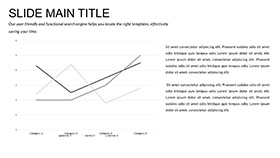
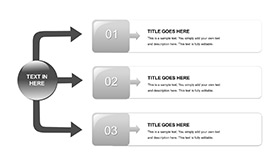
28 Diagrams Across 7 Layouts: Full Contents
What is a Keynote diagram template for education? A Keynote diagram template for education is a .key or .kth file containing pre-built editable slides structured for classroom instruction - covering process flows, comparison diagrams, and task-support layouts that teachers adapt to their subject content without building slides from scratch.
28 diagrams ship in 7 color schemes, with 3 masters and 3 backgrounds. The paid version at $18 includes all diagrams and all color variants; the $10 base tier delivers the 3 masters and 3 backgrounds only. For teachers preparing lessons, tests, and task worksheets, the full diagram set is the core asset - the masters alone cover only the background structure.
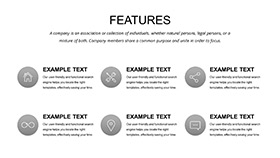
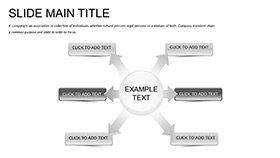
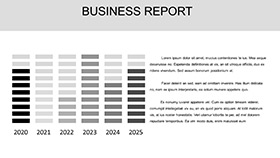
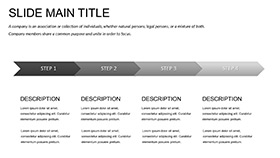
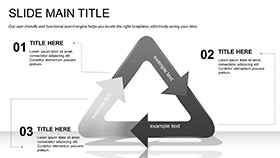
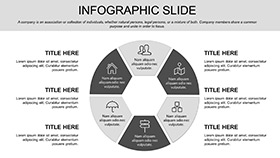
The diagram variety covers the types chemistry educators reach for most: multi-step process sequences for reaction mechanisms, comparison panels for contrasting compound properties, classification hierarchies for periodic groups, and data-summary layouts for presenting experimental results. Each diagram is structured so text labels update independently from the surrounding shapes, which matters when adapting the same slide structure across multiple class levels or exam formats.
Unlike single-theme science templates built around one visual motif, this set spans 7 distinct color schemes - from cooler laboratory blues to warmer accent palettes - so the same underlying diagram structure can be reused across different subjects or differentiated by class group without any manual recoloring. Chemistry educators covering both organic and analytical modules have reused the same base file across an entire semester by rotating color schemes per topic unit.
Browse related layouts in the Education & Training Keynote Theme category for complementary classroom presentation resources.
Editing Capabilities at a Glance
| Feature | Details |
|---|
| Diagrams included | 28 slides across 7 color schemes |
| Masters and backgrounds | 3 masters, 3 backgrounds |
| File formats | .key (editable Keynote file), .kth (theme file for reuse) |
| Keynote compatibility | Keynote 12 and later; iWork compatible |
| Text placeholders | Label fields update without unlocking grouped shapes |
| Color theme adjustments | 7 schemes switchable via master slide palette - applies across all diagrams |
| Diagram connectors | Arrows and flow lines adjustable in direction and thickness |
| Free vs paid difference | $10: 3 masters + 3 backgrounds. $18: full 28-diagram set with 7 color schemes included |
| Export options | .key for editing, .kth for theme reuse, PDF for student handouts |
Three Situations Where This Pays Off
A high school chemistry teacher prepares a unit on chemical equilibrium across three consecutive weeks of lessons. Rather than rebuilding the visual structure for each class, she opens the .key file, selects the process-flow diagrams for week one, applies the blue-toned master scheme, and swaps to the amber scheme for week two's reaction-rate content. Across three weeks of material, total slide setup time stays under 2 hours instead of the 6+ hours typically spent building layouts individually.
A university teaching assistant assembles practice test slides for an analytical chemistry module. The comparison and classification diagrams in this set let her place two compound structures side by side with labeled zones - a layout that would require 20-30 minutes of manual alignment per slide if built from a blank canvas. Using the pre-built structure, she adapts four test-support slides in under 15 minutes.
For curriculum developers at an e-learning company, this template provides a consistent visual framework for chemistry course modules delivered across multiple client institutions. The 7 color schemes allow each client's brand palette to be applied to the same underlying diagram structure - reducing per-client customization from a half-day task to under 30 minutes. A set of background Keynote slides for chemistry education pairs well with this template when building full course decks.
Download and start editing immediately - .key and .kth files included.
From Download to Final Deck
How do I adapt this chemistry Keynote template to my lesson content? Open the .key file in Keynote 12 or later, replace the placeholder text labels with your chemistry terminology, select the 7-color palette matching your institution or course theme via the master slide editor, and delete the diagram slides not relevant to your lesson plan. The entire process from file open to export typically takes 10-20 minutes per lesson set.
- Step 1 - Open the .key file in Keynote 12 or later (1 minute)
- Step 2 - Browse the 28 diagram slides and delete those not relevant to your topic (2 minutes)
- Step 3 - Replace all text placeholders with your lesson content and terminology (5-8 minutes)
- Step 4 - Apply the color scheme matching your class or course via the master palette (2 minutes)
- Step 5 - Export as PDF for student handouts or retain .key for live presentation (1 minute)
Editing difficulty: Beginner. Text fields are accessible without unlocking any grouped layers, and the master palette swap applies instantly across all selected slides. No design experience required.
Building From Scratch vs. Starting Here
A blank Keynote slide contains no diagram structure. Building a single multi-step chemistry process flow from scratch - drawing shapes, aligning connectors, placing labels, matching colors - takes an average of 45-60 minutes for a non-designer. For a 10-slide lesson set covering a full reaction mechanism unit, that represents 7-10 hours of visual production work before any educational content has been written.
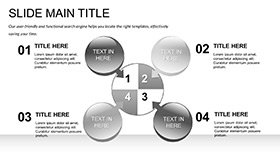
Pre-built diagram structures place labels outside the shapes connected by thin guide lines. That placement is a deliberate design decision: labels inside colored shapes become difficult to read when projected in classrooms with ambient light or lower-output projectors. Labels positioned outside maintain legibility across varied screen and projection conditions without requiring font size adjustments that would distort the overall layout balance.
The 7 color schemes are calibrated so any variant maintains sufficient contrast between diagram segments - a requirement that's easy to miss when manually selecting colors in Keynote's color picker. Color choices that appear distinct on a laptop screen often flatten on a projector; the pre-tested schemes here avoid that problem. For a full lesson deck, pair this with a chemistry lesson student-focused Keynote template to cover both the instructional and student-facing presentation layers.
Download and start editing immediately - all 28 diagrams and 7 color schemes in the $18 full version.
Frequently Asked Questions
Which Keynote versions are compatible with this template?
The files are compatible with iWork Keynote 12 and later on macOS and iPadOS. Keynote 12 shipped with macOS Monterey; any Mac running Monterey, Ventura, or Sonoma opens these files without compatibility issues. Keynote is available as a free update via the Mac App Store, so if you're running an older version, updating costs nothing. Testing on Keynote 9 or 10 may open the file but could show minor layout shifts in master-slide-dependent elements.
What is the difference between the $10 and $18 versions?
The $10 version includes 3 masters and 3 background slides - the structural theme without the diagram content. The $18 version adds all 28 diagrams across 7 color schemes. For any teacher or curriculum developer using this for lessons, tests, or task presentations, the $18 version is the functional choice - the 28 diagram slides are the primary working content. The $10 tier suits buyers who only need the background and master structure to apply to their own slides.
How do I change colors to match my institution's brand?
Color changes are handled through the Keynote master slide palette. In Keynote, go to View → Edit Master Slides, select the master corresponding to your preferred scheme, update the color fills to your institution's hex values, and close the master editor. The updated palette applies across all diagram slides linked to that master simultaneously. If your institution uses specific hex codes, Keynote's color picker accepts hex input directly under the "Color Sliders" tab when set to hexadecimal mode.
Can this template be used for commercial e-learning course production?
The standard license covers use in educational presentations, internal training, and client-facing deliverables where the template is embedded inside a finished course or slide deck. Distributing the raw .key or .kth files to third parties, reselling the template as a standalone product, or sublicensing it to other organizations is not permitted. For e-learning companies producing courses for multiple client institutions from the same template, a single purchase covers all of those internal production uses.
What is the refund policy for digital downloads?
Refunds are available primarily for confirmed technical defects - situations where the file cannot be opened in the compatible Keynote version stated on the product page. Because the files are digital downloads, change-of-mind refunds after download are not available. To request a refund for a technical issue, contact ImagineLayout support with your Keynote version number and a description of the problem. The full refund policy is accessible under the "Refund policy" link in the site footer.
Does the template support animations?
The .key format natively supports Keynote's full animation system - build-in, build-out, and action animations. No animations are pre-applied by default in the downloaded file. That's intentional: pre-applied animations in classroom templates often need to be removed before presentation because they conflict with the pacing a teacher has already planned. Adding animations from a clean baseline takes 2-3 minutes per slide using Keynote's Animate panel; removing unwanted pre-sets from a template with animations already applied typically takes longer.