
Free Templates Word templates
A department head drafting a supplier proposal at 9pm doesn`t need a design session - they need a document structure that already makes sense. These free Word templates give you pre-built layouts for the range of real-world document tasks: business reports, meeting agendas, corporate correspondence, and themed files for events, education, or community communication. You`ll find neutral business layouts alongside themed designs covering science education, cultural events, fitness, and seasonal occasions. That breadth makes this the right starting point when you`re not sure what structure fits your document - browse, pick the closest match, and adapt it.
A consultant formatting a client deliverable reaches for a different layout than a training coordinator building a course handout, and both will find something here. When I opened a business report template from this collection for a quarterly client review, the pre-set styles meant I spent zero minutes on layout and all my time on the analysis that actually mattered. Download the layout that fits your document and replace the placeholder content with your own.
 (1127)
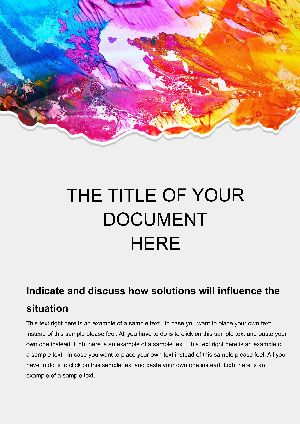
 Enchanting Colors Word Template: Design DocsID: #WT01361free
 (1102)
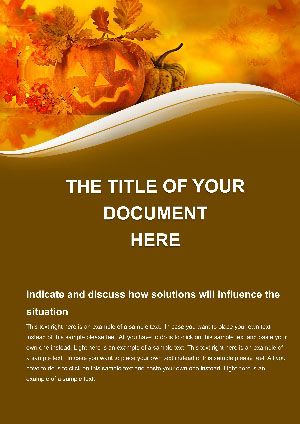
Autumn Celebration Halloween Word Template: Spooky Designs for Festive DocsID: #WT01322free
(1102)
Autumn Celebration Halloween Word Template: Spooky Designs for Festive DocsID: #WT01322free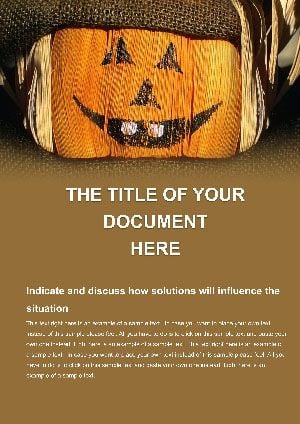 (277)
Free Pumpkin Smiles Word Template: Grin into AutumnID: #WT01319free
(277)
Free Pumpkin Smiles Word Template: Grin into AutumnID: #WT01319free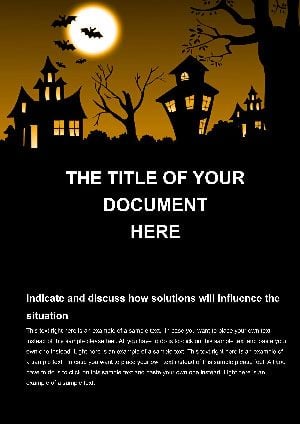 (153)
(153) Free Halloween Cityscape Word TemplateID: #WT01316free
 (453)
(453) Elegant Secret Flower Free Word TemplateID: #WT01159free
 (1190)
Free Atomic Emission Spectrum Word TemplateID: #WT01129free
(1190)
Free Atomic Emission Spectrum Word TemplateID: #WT01129free (622)
Free Beach Island Vacation Word TemplateID: #WT01065free
(622)
Free Beach Island Vacation Word TemplateID: #WT01065free (311)
Full Throttle Ahead: The Professional Race Word TemplateID: #WT01042free
(311)
Full Throttle Ahead: The Professional Race Word TemplateID: #WT01042free (755)
Sweat with Style: The Fitness and Orange Word TemplateID: #WT01041free
(755)
Sweat with Style: The Fitness and Orange Word TemplateID: #WT01041free (806)
Free Radio Telescope Word Template for Astronomy DocsID: #WT01024free
(806)
Free Radio Telescope Word Template for Astronomy DocsID: #WT01024free (883)
Roses with Greeting Word Template: Bloom Words of EleganceID: #WT00932free
(883)
Roses with Greeting Word Template: Bloom Words of EleganceID: #WT00932free (908)
Free Yearly Calendar Word Template: Organize Your Year EffortlesslyID: #WT00925free
(908)
Free Yearly Calendar Word Template: Organize Your Year EffortlesslyID: #WT00925free (880)
Free Year of the Dragon Word Template: Ignite Your Projects with Cultural FlairID: #WT00924free
(880)
Free Year of the Dragon Word Template: Ignite Your Projects with Cultural FlairID: #WT00924free (249)
Free Molecule Structure Word Template | ImagineLayoutID: #WT00898free
(249)
Free Molecule Structure Word Template | ImagineLayoutID: #WT00898free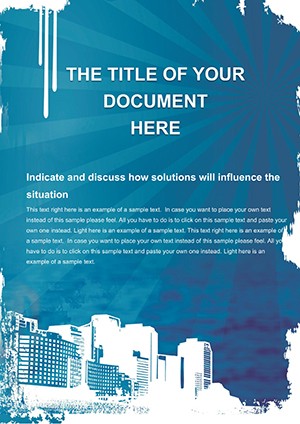 (135)
Free Vector City Word Template for Print DocsID: #WT00893free
(135)
Free Vector City Word Template for Print DocsID: #WT00893free (797)
Free Workplace Word Template: Forge Professional FlowID: #WT00885free
(797)
Free Workplace Word Template: Forge Professional FlowID: #WT00885free (685)
(685) Free Nurturing the Future Word Template DownloadID: #WT00861free
 (316)
Free Pink Spots Word Template: Elevate Your Documents with Subtle EleganceID: #WT00846free
(316)
Free Pink Spots Word Template: Elevate Your Documents with Subtle EleganceID: #WT00846free (994)
Free Star Word Template: Star-Studded Designs for Impactful DocumentsID: #WT00843free
(994)
Free Star Word Template: Star-Studded Designs for Impactful DocumentsID: #WT00843free (579)
History Calendar 2011 Word Template: Journey Through Time's HighlightsID: #WT00824free
(579)
History Calendar 2011 Word Template: Journey Through Time's HighlightsID: #WT00824free (1101)
Free Business Word Template for Pro DocsID: #WT00814free
(1101)
Free Business Word Template for Pro DocsID: #WT00814free (968)
Wildlife Conservation Word TemplateID: #WT00798free
(968)
Wildlife Conservation Word TemplateID: #WT00798free (175)
Free Open Window Word Template: Breathe Life into Your DocumentsID: #WT00795free
(175)
Free Open Window Word Template: Breathe Life into Your DocumentsID: #WT00795free (650)
Free Dynamic and Professional Word Template: Ignite Your ProductivityID: #WT00793free
(650)
Free Dynamic and Professional Word Template: Ignite Your ProductivityID: #WT00793free (833)
Green Background Word Template: Fresh Document StylesID: #WT00754free
(833)
Green Background Word Template: Fresh Document StylesID: #WT00754free (989)
Blue Expanse Free Word Template for ProsID: #WT00750free
(989)
Blue Expanse Free Word Template for ProsID: #WT00750free (100)
Free Blue Lightning Word Template: Ignite Your Documents with Electric StyleID: #WT00692free
(100)
Free Blue Lightning Word Template: Ignite Your Documents with Electric StyleID: #WT00692free (553)
Free Chain Compound Word Template: Build Vocabulary Links | ImagineLayoutID: #WT00683free
(553)
Free Chain Compound Word Template: Build Vocabulary Links | ImagineLayoutID: #WT00683free (1071)
Free Chemical Industries Word Template: Pro DocsID: #WT00567free
(1071)
Free Chemical Industries Word Template: Pro DocsID: #WT00567free (257)
Free Hinduism God Word Template: Portals to the DivineID: #WT00463free
(257)
Free Hinduism God Word Template: Portals to the DivineID: #WT00463free (697)
Free Indian Religions Word Template Download | ImagineLayoutID: #WT00459free
(697)
Free Indian Religions Word Template Download | ImagineLayoutID: #WT00459free (897)
Free Jewish Culture Word Template: Weave Threads of Timeless LegacyID: #WT00456free
(897)
Free Jewish Culture Word Template: Weave Threads of Timeless LegacyID: #WT00456free (466)
Medical Blood Analysis Word Template: Precision in Every ReportID: #WT00328free
(466)
Medical Blood Analysis Word Template: Precision in Every ReportID: #WT00328free
What a Word template actually does that blank documents don`t
A blank Word document is not a neutral starting point - it`s a formatting trap. The moment you paste content, you start making invisible decisions: heading sizes, table widths, spacing after paragraphs, list indentation. Those decisions drift. By page 10, the document looks inconsistent, and you spend another 20 minutes fixing it. A template with properly configured styles prevents that drift entirely. Heading 1 is defined once. Table borders are set. Body text spacing is locked. When you apply the Heading 2 style, it looks the same on page 14 as it does on page 1. That`s the real value - not decoration, but consistency that survives editing.
Five real-world scenarios where a Word template solved the communication problem
Consultant, client deliverable, Sunday 10pm. The analysis is done, but the document needs to look professional. Opening a business report template gives pre-set heading styles, a table of contents structure, and formatted tables. Paste in the content, apply the heading styles to each section, export to PDF. The template removed the formatting decision-making entirely.
Training coordinator, compliance workshop handout. The document needs to balance readability with density - bullet points, callout boxes, margin notes for key regulations. A themed layout with pre-defined note styles and sidebars saves the effort of manually formatting each section. The visual structure reinforces the content hierarchy.
Department head, supplier proposal with a tight deadline. The document needs to look consistent with company branding but the deadline is tomorrow. A neutral business layout with the company logo placed in the header and theme colors applied takes five minutes to adapt. The proposal goes out looking like it came from a formal procurement process.
Science teacher, parent newsletter for chemistry department open house. The themed molecular structure layout includes visual elements that signal the subject without requiring design skills. The newsletter looks intentional, not generic. The parents read the content, not the formatting.
HR generalist, policy update announcement. The document needs to be official but not overly formal. A corporate memo layout with consistent spacing and clear heading levels communicates the policy change without confusion. Multiple people edit the draft before final approval - the styles panel ensures everyone`s changes don`t break the formatting. When I used a template from this collection for a client quarterly review, the pre-set styles meant I spent zero minutes on layout.
What a Word template communicates that a PowerPoint deck cannot
A Word document is for reading. A PowerPoint deck is for listening. This distinction matters. A contract belongs in Word. A summary of that contract`s key terms, presented to a leadership team, belongs in PowerPoint. Using a Word template when the primary need is text-based communication ensures that paragraphs are readable, numbered clauses are referenced, and printed documents file correctly. For teams that produce both - consultants, HR departments, finance groups - having matched templates in both formats means reports and their accompanying presentation decks can look like they came from the same organization.
When to choose this free Word template collection over adjacent formats
This category covers general document structures. If you need a more specialised document system - complex reports, legal pleadings, academic theses - the full Word templates library offers deeper specialisation. For presentation decks that accompany these documents, the free PowerPoint templates collection holds layouts that work alongside these document structures. And if your work involves printed marketing materials, something like brochure templates is a better fit. For internal reports, proposals, and documentation, this is the right level of design: less decoration, more structure.
Why rebuilding a document from scratch wastes time you don`t have
The real value here is the underlying Word setup. Styles are predefined, heading hierarchy is consistent, and spacing behaves predictably when content grows. That`s what saves time. Not colours, not shapes - the fact that you don`t have to fix formatting every time you paste text. The first time you open one, it looks simple. But once you start editing, you see the logic behind it. These templates rely heavily on Word styles rather than manual formatting. That means you can change a heading style once and update the entire document. Sounds obvious, but many templates don`t do this properly.
Technical note: How Word styles behave when you edit
Open the Styles pane in Word (Ctrl+Shift+Alt+S on Windows, Cmd+Shift+S on Mac). Look at what`s defined. A well-configured template has named styles for every text level: Title, Heading 1, Heading 2, Body Text, Caption, and usually at least one table style. A poorly configured template has everything set as Normal with manual formatting applied on top. If you see that, walk away. It will break. When you use a template from this collection, always use the styles pane. Manually bolding a heading or dragging font sizes doesn`t apply a style - it just changes the appearance of that one instance. That workflow brings the inconsistency back. Invest 10 minutes learning the styles panel once; it changes how every Word document feels to work in.
How to use these templates for recurring documents
The best use of a Word template isn`t the first document you make from it - it`s the fifth. Once you`ve customised a layout (colours updated, logo added to the header, default font matching your brand), save that version as a .dotx file through File → Save As → Word Template. From then on, every new document based on that template starts with your branding already in place. For teams producing the same document types repeatedly - monthly project status reports, quarterly supplier reviews, weekly operations summaries - this approach effectively builds a document system. The template files stored in a team SharePoint or shared drive can be accessed by everyone without each person maintaining their own copy. Update the shared template once, and the next person to open it starts with the current version.
Why this free collection is different from generic marketplaces
Most free template collections are a mess - decorative but fragile, with manual formatting that breaks the moment you paste real content. This collection is different because the templates are built around Word styles, not manual overrides. That means they survive editing. You can add a row to a table without the borders disappearing. You can paste a paragraph without the spacing collapsing. You can change a heading style once and the whole document updates. The trade-off is that the designs are not flashy. They`re functional. If you need a single-page brochure with heavy graphics, look elsewhere. If you need a 12-page report that someone has to read line by line, start here.
Navigation: related Word resources
This free collection covers a broad range of document types. For more specialised document structures - complex reports, legal pleadings, academic theses - the full Word templates library offers deeper specialisation. For presentation decks that accompany these documents, the free PowerPoint templates collection holds layouts that work alongside these document structures. And if you`re looking for document types beyond Word, explore brochure templates or business card templates. Each category has its own editing behaviour, so choose the format that matches your output.
Frequently asked questions
What is the difference between a Word template and a regular Word document?
A regular Word document (.docx) stores content and formatting together. A Word template (.dotx) stores only the formatting - styles, page layout, headers, footers - and acts as a blueprint. When you open a template, Word creates a new document that inherits all the formatting but leaves the original template unchanged. That means you can use the same template a hundred times without ever overwriting it. The practical difference is consistency: with a template, every document starts with exactly the same heading styles, margin settings, and table borders. With a regular document used as a template, you risk accidentally saving over the original or introducing formatting drift.
Will these templates work on both Windows and Mac versions of Word?
Yes, but with a few caveats. The .dotx and .docx formats are cross-platform. Basic styles, tables, headers, and footers render identically. However, font availability differs between Windows and Mac. If a template uses a font that isn`t installed on your Mac, Word will substitute something else, which can shift line breaks and page lengths. The templates in this collection stick to standard fonts (Calibri, Arial, Times New Roman) to minimise this problem. Also, some layout features like text boxes and floating shapes may shift slightly. My advice: after downloading, do a quick check of the first two pages on your system before committing to a long document. If something looks off, change the font to a standard one and reapply the styles.
What should I check before using a Word template from any source?
Open the Styles pane. That`s the single most important check. A well-built template has clearly defined styles for headings, body text, captions, and tables. A bad template will show everything as "Normal" with manual formatting overrides. If you see manual overrides (bold, italic, font size changes applied directly to text), the template will break as soon as you paste content or add a paragraph. Another check: add a row to a table. Does the new row inherit the same formatting? In a good template, yes. In a bad one, you`ll get a plain white row with mismatched borders. Also, look at the page margins. Some templates use text boxes for layout instead of proper margins. Those are fragile and can shift when exported to PDF. Avoid them.
Are these templates free for commercial use?
Yes, the templates in this free collection are free for both personal and commercial use. You can use them for client reports, internal business documents, proposals, and any other commercial work without paying a licence fee or crediting the source. The only restriction is that you cannot resell the templates themselves or redistribute them as standalone files. You can modify them, rebrand them, and use them within your organisation or for client work. I`ve used them for paid consulting deliverables without any issues. If you need a template for a high-volume production environment (thousands of documents), consider the paid library for deeper structure and support.
What is the best way to adapt a Word template to my company`s branding?
The most efficient method is to open the template, then modify the styles directly. Go to the Styles pane, right-click on Heading 1, choose "Modify", and change the font, size, and colour to match your brand. Do the same for Heading 2, Body Text, and any other styles you use. This updates every instance of that style instantly - no manual reformatting. Next, add your logo to the header. Insert it as an inline image, not a floating shape, so it stays anchored. Finally, save the customised version as a .dotx file. From then on, every new document based on that template starts with your branding already in place. This approach takes about 10 minutes once and saves hours over the course of a year.


