This category contains fully editable bar, line, pie, scatter, area and radar charts built directly inside Microsoft Word documents. These layouts help analysts and managers turn raw numbers into readable graphics without starting from blank pages.
It is designed for finance teams running quarterly reviews, marketing departments preparing campaign reports and consultants building client updates. Choose these when default Word tables or basic shapes fall short on clarity and branding consistency.
Take a financial analyst preparing the quarterly performance summary for the board meeting at a mid-size bank. Instead of manually formatting each bar chart, the template loads the data, applies the company color scheme and adjusts legends automatically.
Download the files and adapt them to your next data-heavy document.

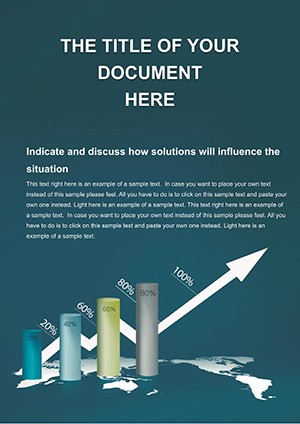










Finance managers in banking use these chart templates during quarterly reviews to display revenue trends and expense breakdowns for executive teams. The layouts allow quick data swaps while keeping corporate branding intact across 20-page reports.
Marketing coordinators in consumer goods companies rely on them for campaign performance decks sent as Word attachments to stakeholders. Pie charts show channel split and line charts track month-over-month growth without redesigning each slide.
Academic researchers in universities insert scatter plots and area charts into grant proposals and journal submissions. The templates maintain consistent axis labels and color coding required by funding bodies.
Management consultants prepare client strategy documents where radar charts compare competitor performance across six key metrics. Each template supports direct Excel data linking for live updates before board meetings.
Default Word shapes require manual alignment, color matching and legend creation every time. Chart templates come with pre-set styles that match company guidelines from the first click.
Blank documents force users to build axes, gridlines and data labels from scratch, often leading to inconsistent sizing across pages. Templates provide scalable elements that resize together with the data.
Updating numbers in default charts breaks formatting and requires re-styling every element. These templates keep design locked while data refreshes via simple paste or link.
Default options lack built-in color palettes for corporate themes, resulting in mismatched visuals. Templates include ready palettes and allow one-click theme application.
Blank pages offer no guidance on chart type selection for specific data sets. Templates include examples and tooltips for choosing the right visualization for trends versus comparisons.
Start by matching the chart color palette to your company brand guide before adding data. This step ensures every document looks cohesive when shared with external partners.
Link charts to an external Excel file rather than typing numbers directly. Future updates then flow automatically without opening each chart individually.
Test print the document in both color and grayscale modes. Some line styles and fills look different on paper than on screen.
Keep chart titles concise and place legends below or to the side based on page layout. Avoid overcrowding the page with too many charts in one section.
Review accessibility settings by adding alt text to each chart for screen readers used in corporate compliance checks.
In Microsoft Word, select any chart and go to the Chart Design tab. Use the Select Data button to link directly to an Excel range. This connection updates all values and categories automatically when the source file changes, saving hours during last-minute report revisions before investor pitches.
Competitors often supply generic layouts copied from basic software defaults. ImagineLayout builds each chart template around actual consulting frameworks used in board meetings and quarterly reviews at Fortune 500 companies. The result is layouts that support real data flows and decision-making processes rather than decoration alone.
Our files open directly in any recent Word version without conversion steps or broken elements. Other marketplaces frequently require extra plugins or older file formats that cause compatibility issues during team collaboration.
After purchase each file arrives as a clean DOCX package. Open it directly in Microsoft Word 2016 or newer. No additional software or conversion is required. The charts are embedded and ready for immediate data entry.
Yes, all templates work in Word 2016 and later versions on both Windows and Mac. Some advanced data linking features perform best in Word 2019 or Microsoft 365 subscriptions, but basic editing and styling remain fully functional in earlier supported releases.
Every chart includes editable style panels. Change fill colors, line weights and fonts through the standard Word formatting tools. The templates preserve your changes even after data updates, allowing full alignment with corporate identity guidelines.
Yes. Select the chart, open the Chart Design tab and choose Select Data. Paste or link your Excel range directly. All values and categories refresh automatically when the source file is updated.
Each template comes with a single-user commercial license. You may use the files in client projects and internal reports without additional fees. Redistribution of the original template files themselves is not permitted.
Copyright © 2009-2026 ImagineLayout All rights reserved.