00% off everything!
SALE ENDS TODAY, Saturday November 0
Promo code "00LAYOUTS"
Time Left to Save
00:00:00

Chain System PowerPoint Charts Template: Process Flow & Workflow Visualization

4
317 ratings
Chain System PowerPoint Charts Template: Process Flow & Workflow Visualization - Slide #0
Chain System PowerPoint Charts Template: Process Flow & Workflow Visualization - Slide #1
Chain System PowerPoint Charts Template: Process Flow & Workflow Visualization - Slide #2
Chain System PowerPoint Charts Template: Process Flow & Workflow Visualization - Slide #3
Chain System PowerPoint Charts Template: Process Flow & Workflow Visualization - Slide #4
Chain System PowerPoint Charts Template: Process Flow & Workflow Visualization - Slide #5
Chain System PowerPoint Charts Template: Process Flow & Workflow Visualization - Slide #6
Chain System PowerPoint Charts Template: Process Flow & Workflow Visualization - Slide #7
Chain System PowerPoint Charts Template: Process Flow & Workflow Visualization - Slide #8
Chain System PowerPoint Charts Template: Process Flow & Workflow Visualization - Slide #9
Chain System PowerPoint Charts Template: Process Flow & Workflow Visualization - Slide #10
Chain System PowerPoint Charts Template: Process Flow & Workflow Visualization - Slide #11
Chain System PowerPoint Charts Template: Process Flow & Workflow Visualization - Slide #12
Chain System PowerPoint Charts Template: Process Flow & Workflow Visualization - Slide #13
Chain System PowerPoint Charts Template: Process Flow & Workflow Visualization - Slide #14
Chain System PowerPoint Charts Template: Process Flow & Workflow Visualization - Slide #15
thumbnail slide #0
thumbnail slide #1
thumbnail slide #2
thumbnail slide #3
thumbnail slide #4
thumbnail slide #5
thumbnail slide #6
thumbnail slide #7
thumbnail slide #8
thumbnail slide #9
thumbnail slide #10
thumbnail slide #11
thumbnail slide #12
thumbnail slide #13
thumbnail slide #14
thumbnail slide #15

Type: PowerPoint Charts template

Category: Process

Sources Available: .pptx

Product ID: PC00192

Template incl.: 16 editable slides

Purchase this template
$ 22.00

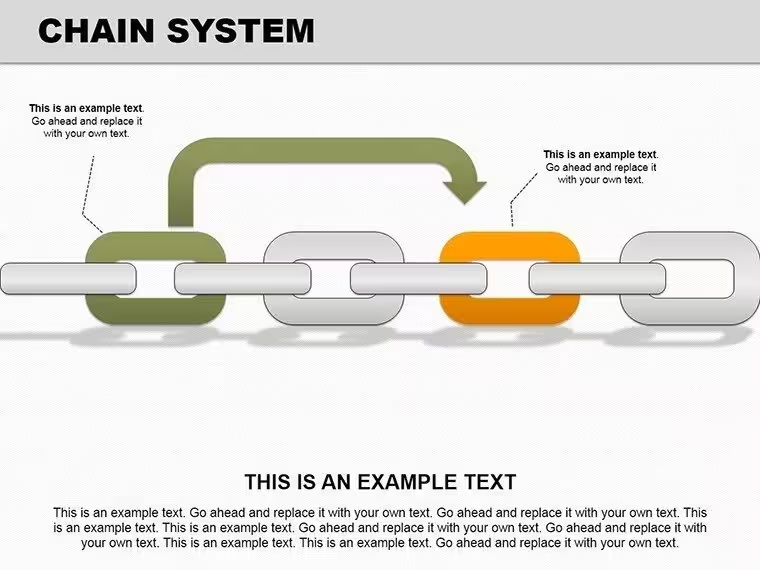
The Chain System PowerPoint Charts Template solves a critical presentation challenge: how do you visually connect sequential steps in a process so stakeholders instantly grasp dependencies, bottlenecks, and flow logic? Whether you're presenting supply chain operations to executives, mapping customer journey touchpoints for marketing teams, or documenting standard operating procedures for training sessions, disconnected bullet points fail to show how each phase influences the next. This 16-slide template transforms linear lists into visually linked process chains that guide audiences through complex workflows with clarity and precision.

Designed for operations managers, process consultants, project coordinators, and business analysts, these chain diagrams use interconnected node structures to represent workflows where each step builds upon or triggers the previous one. The visual metaphor of linked chains immediately communicates dependency relationships - critical when explaining manufacturing sequences, approval hierarchies, or multi-stage service delivery models. Unlike static flowcharts that feel rigid, these flexible chain layouts adapt to your data structure, whether you're showing a simple 4-step onboarding process or a complex 12-phase product development cycle.

Visual Process Mapping: Chain Slide Variations & Editing Workflow

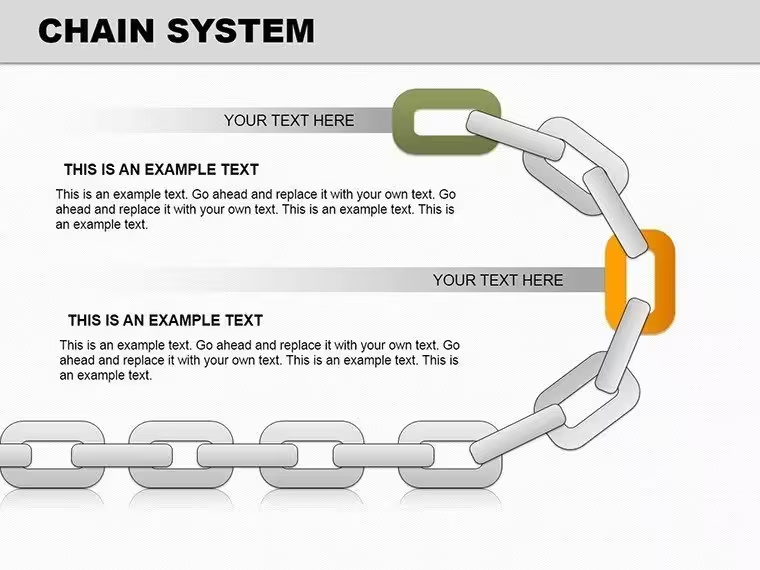
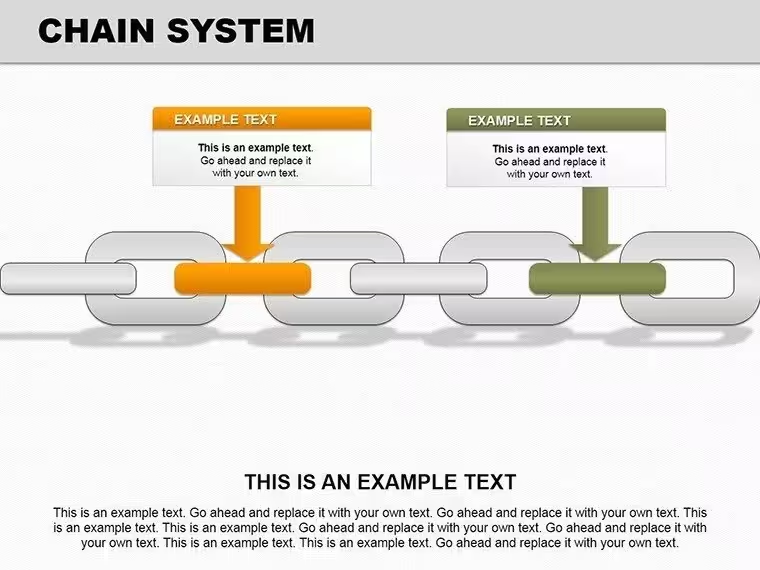
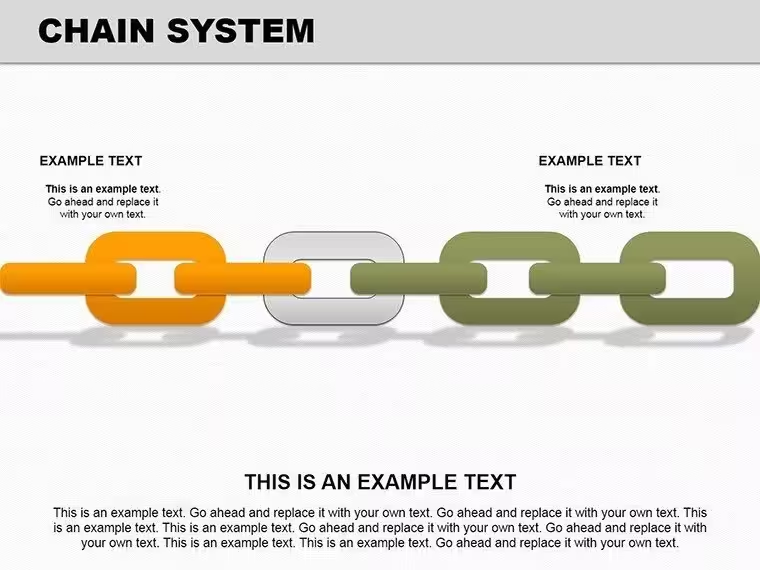
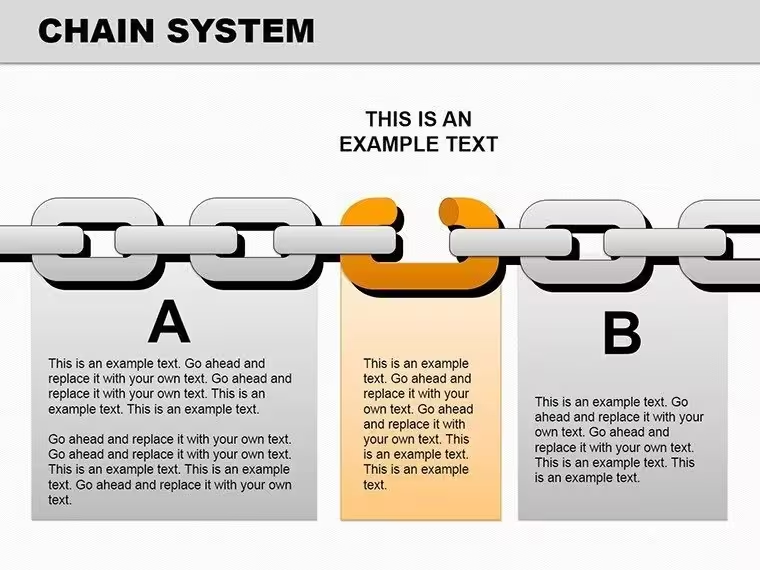
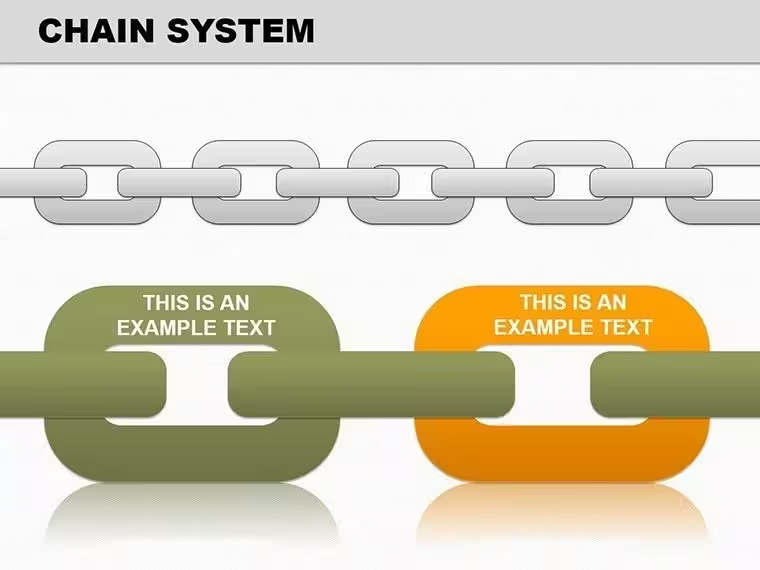
Each slide layout addresses specific process documentation needs. Slide 3 presents horizontal linear chains ideal for timeline-based workflows - I've used this exact format when mapping a 6-month vendor onboarding process for a procurement review, where each link represented contract milestones. Slide 7 introduces branching chain structures perfect for decision trees; during a recent operational audit presentation, this layout clearly showed how quality control failures trigger rework loops versus approval paths.

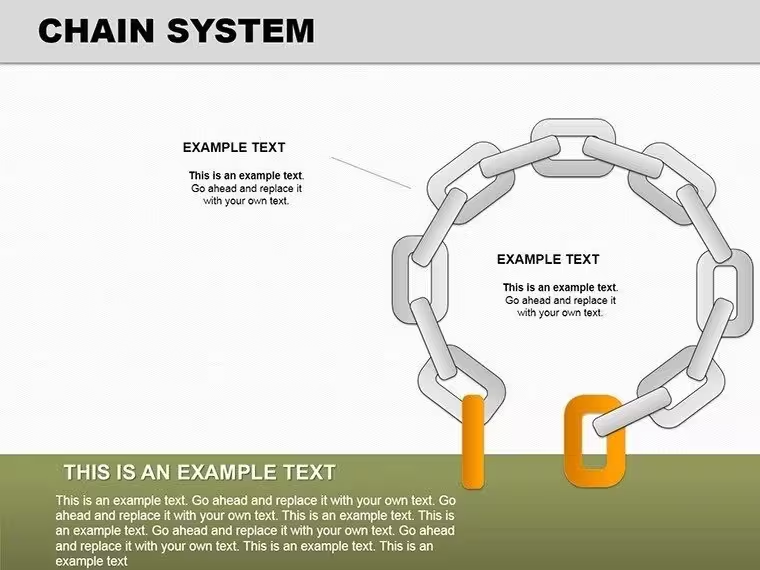
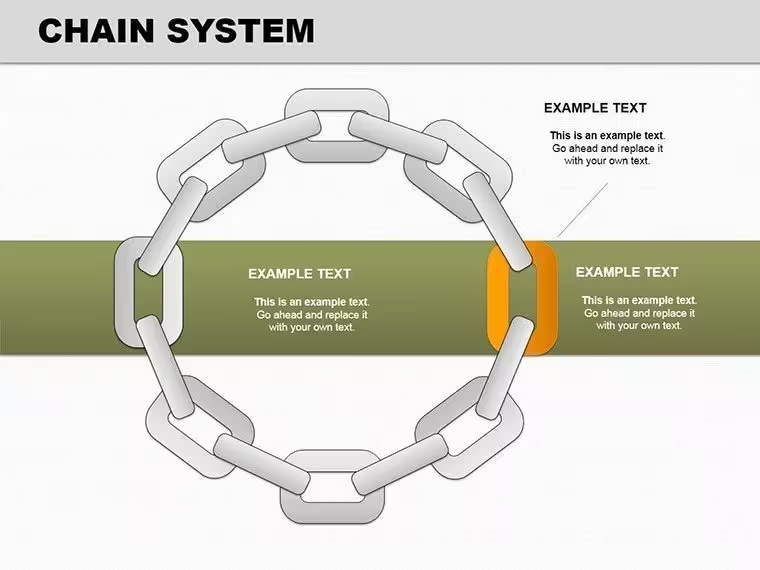
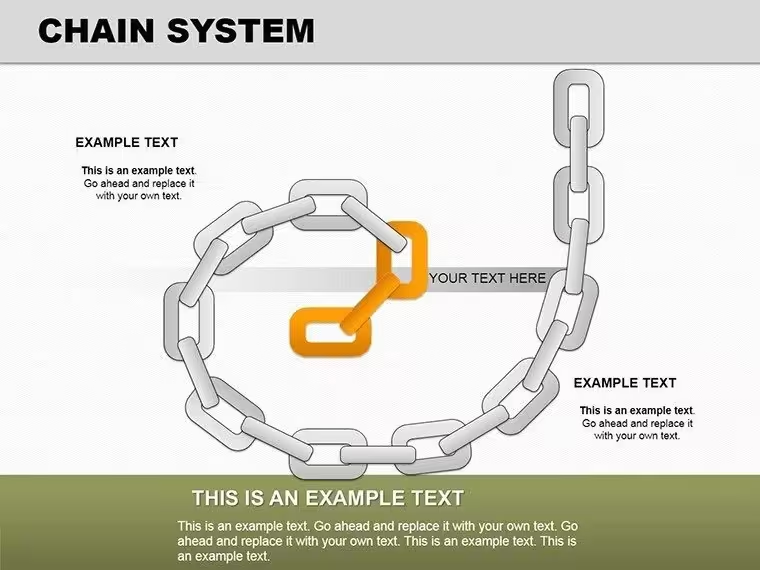
The template includes circular chain loops (Slide 11) for continuous improvement cycles and iterative processes - finance teams find these invaluable for budget review workflows that repeat quarterly. Vertical chain arrangements (Slide 5) work well when presenting hierarchical approval chains to board members who need to see escalation paths at a glance. All chain elements use vector shapes, ensuring crisp display whether you're projecting in a boardroom or sharing PDFs with remote stakeholders.

Editing is straightforward in PowerPoint 2016+: Click any chain node to reposition, drag connection arrows to reroute flow paths, or use the format painter to apply consistent styling across multiple chains. Text boxes within each link accommodate 2-3 lines of description - enough for step labels plus brief KPI indicators like "avg. 3 days" or "approval required." The color palette uses neutral grays with customizable accent colors, allowing you to highlight critical path steps or color-code by department without redesigning from scratch.

Real-World Applications: When Chain Charts Win Over Alternatives

Use chain system diagrams when process sequence and dependencies matter more than timing precision. In manufacturing settings, I've deployed these charts to map assembly line stations where each workstation's output becomes the next station's input - the visual chain instantly showed where inventory buffers were needed. During software implementation projects, chain diagrams documented data migration workflows where source validation, transformation, and loading stages had strict sequential dependencies.

Marketing operations teams leverage chain charts for campaign execution workflows, linking content creation - approval - scheduling - publishing steps. The visual continuity helps cross-functional teams understand their role in the larger process. For training materials, chain diagrams excel at documenting multi-step procedures where skipping or reversing steps causes failures - think equipment startup sequences or financial close checklists.

Avoid chain charts when: You need precise duration data (use Gantt charts instead), parallel processes dominate (swimlane diagrams work better), or the workflow changes based on real-time conditions (decision matrices are clearer). Chain diagrams communicate "this leads to that" relationships - if your process is more about simultaneous actions or conditional branching with multiple decision points, consider alternative layouts from the process chart category.

Workflow Integration: Editing Chains Across Presentation Platforms

In PowerPoint, chain elements behave as grouped shapes. Ungroup them (Ctrl+Shift+G) to adjust individual links, then regroup to maintain alignment when moving entire chains. I recommend creating a master slide with your standard chain styling - node size, connector thickness, font specifications - then duplicating it for consistency across your deck. For presentations requiring frequent updates, link chain text boxes to Excel tables using Paste Special - Link; when process steps change in your source document, right-click and select Update Link to refresh the slide.

Google Slides compatibility is solid - upload the .pptx file and most formatting transfers cleanly, though you may need to manually adjust arrow connectors if they shift slightly. For collaborative editing, Google Slides' commenting features let process owners suggest changes to specific chain links without altering the master layout. Keynote users can import the template via File - Open, with the caveat that some connector auto-routing may require manual tweaking; the tradeoff is worth it for the professional chain styling that would take hours to build natively in Keynote.

For recurring presentations like monthly operational reviews, save your edited template as a .potx file (PowerPoint Template format). This preserves your customized chain styles, color schemes, and placeholder text, letting you start new decks with consistent branding in seconds. When presenting live, use PowerPoint's Slide Zoom feature to create interactive navigation between different process chains - especially useful when stakeholders want to drill into specific workflow segments during Q&A.

Presentation Scenarios: Chain Charts in Executive & Operational Meetings

Quarterly business reviews: Operations directors use chain diagrams to walk executive teams through process improvements. In a recent manufacturing QBR, the VP of Operations showed a before/after chain comparison - the original 9-step quality inspection process versus the streamlined 6-step version. The visual reduction in chain links immediately communicated efficiency gains without diving into detailed metrics first; executives asked for cost impact data only after seeing the simplified flow.

Process documentation workshops: When facilitating ISO certification prep sessions, process consultants project chain templates and build the workflow collaboratively with department leads. Starting with a blank chain structure keeps discussions focused on sequence logic rather than getting distracted by formatting. The shared visual becomes the single source of truth that everyone references during implementation.

Training material development: HR teams incorporate chain diagrams into onboarding decks to show new hires how their role connects to upstream and downstream processes. A customer service training deck I reviewed used chains to map the ticket lifecycle from customer inquiry through resolution and feedback - new reps could literally see where their work fit in the larger support operation.

Investor presentations: Startups explaining operational scalability use chain diagrams to demonstrate how adding automation at specific workflow links reduces per-unit processing time. The visual sequence helps investors understand where capital investments in technology will yield compounding efficiency benefits across the entire process chain.

Chain Template Structure: Slide-by-Slide Breakdown

Slide RangeChain ConfigurationBest Used ForTypical Audience
1-4Horizontal linear chains (3-7 links)Sequential workflows, timelines, simple processesGeneral stakeholders, training audiences
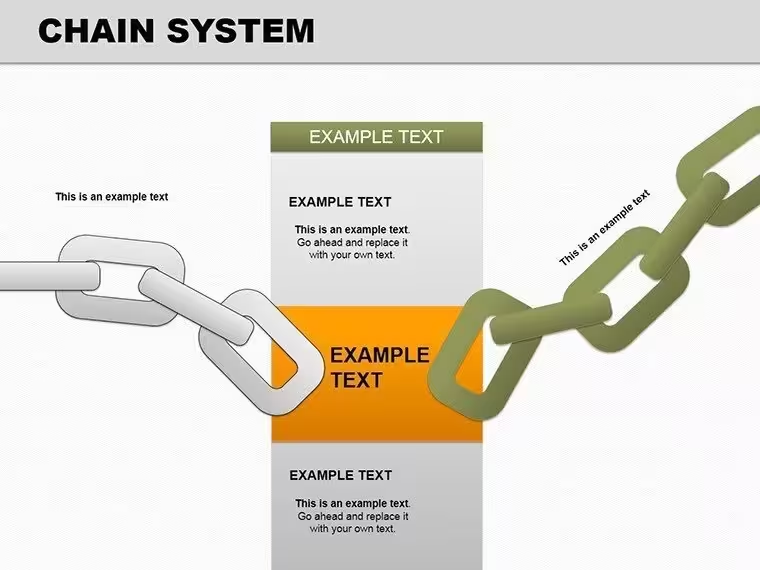
5-8Vertical & stacked chainsHierarchical approvals, escalation paths, reporting structuresManagement teams, compliance officers
9-12Circular & loop chainsContinuous improvement cycles, iterative processes, recurring workflowsOperations teams, quality managers
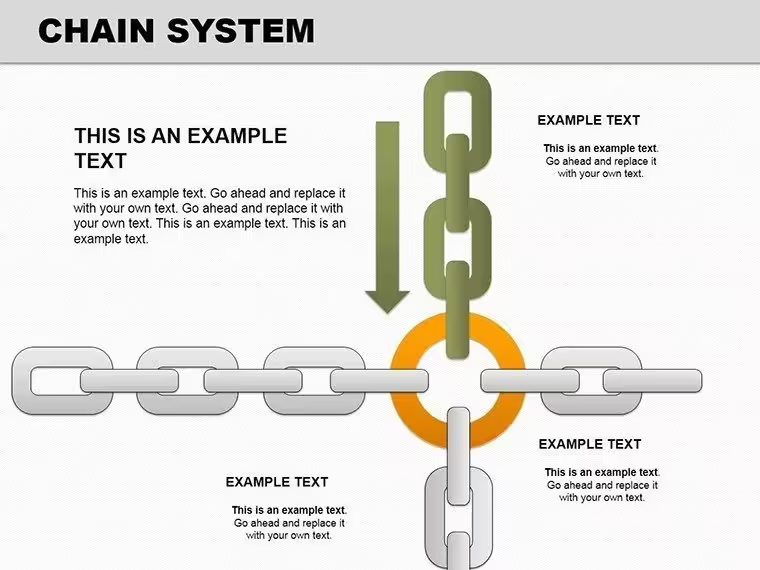
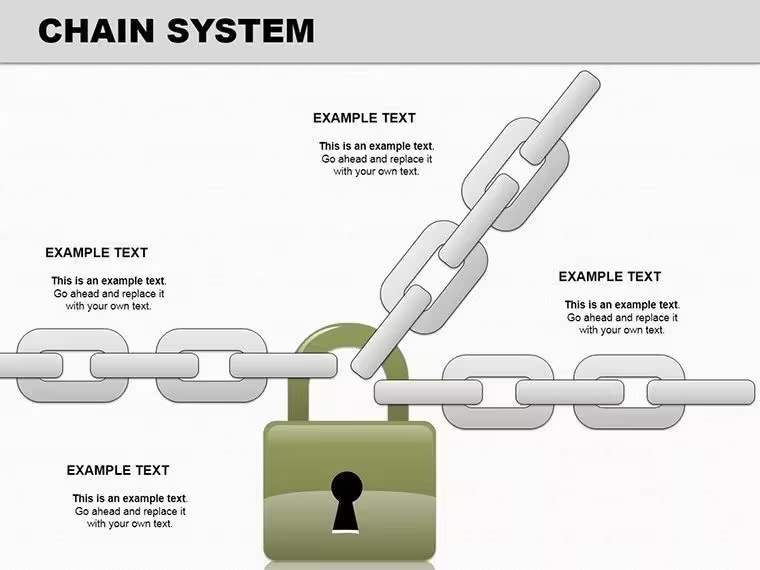
13-16Branching & decision chainsConditional workflows, scenario planning, multi-path processesProject managers, strategic planners

This variety ensures you're not forcing data into incompatible layouts. I've built entire 30-slide operational decks using only this template by strategically selecting chain configurations that match each process type - linear chains for manufacturing sequences, loops for monthly close processes, branches for exception handling procedures.

Industry-Specific Chain Chart Applications

Manufacturing & Supply Chain: Map raw material procurement - production - quality control - distribution chains. Highlight critical path links where delays cascade through the entire chain. Color-code links by vendor reliability or lead time to focus improvement efforts.

Healthcare & Clinical Operations: Document patient flow chains from admission through discharge, showing clinical handoffs where communication breakdowns typically occur. Chain diagrams help hospital administrators identify bottleneck stages in emergency department workflows or surgical scheduling processes.

Financial Services & Compliance: Visualize transaction processing chains, audit workflows, or regulatory approval sequences. The linked structure clearly shows where segregation of duties occurs and which steps require dual authorization - critical for demonstrating internal controls to auditors.

Software Development & IT: Map deployment chains showing code commit - build - test - staging - production stages. DevOps teams use these in postmortem presentations to trace how deployment failures propagated through integrated systems. The chain visual makes it obvious where additional checkpoints should be added.

Marketing & Campaign Management: Link content creation, approval, distribution, and performance measurement stages. Marketing directors present these chains to executive leadership to justify headcount requests - showing bottlenecks in approval chains that delay campaign launches validates the need for additional resources or process streamlining.

Download the Chain System PowerPoint Charts Template now and transform how you present interconnected processes. For complex operational documentation needs, combine with timeline templates or organizational charts for comprehensive workflow visualization.

Can I use chain charts for project management presentations instead of Gantt charts?

Chain charts work well for showing task dependencies and sequence but don't display duration or parallel activities effectively. Use them in project kickoffs to explain workflow logic to stakeholders unfamiliar with Gantt chart conventions, then switch to timeline-based charts for detailed scheduling. In status updates, chain diagrams can highlight completed links versus remaining steps without the complexity of full project schedules. They're particularly effective when presenting to executives who need conceptual understanding over detailed scheduling data.

How do I handle processes with multiple decision points in chain layouts?

Use the branching chain slides (13-16) which include split-path connectors. For complex decision trees with 5+ branches, consider breaking the process into two slides: one showing the main sequence chain, another detailing the decision logic at critical branch points. I've found that chains work best for 2-3 decision branches; beyond that, dedicated decision matrix templates provide clearer visualization. You can also use color coding - green links for approved paths, red for rejection/rework loops - to maintain chain continuity while showing different outcomes.

What's the recommended number of links per chain for executive presentations?

Keep executive-facing chains to 5-7 links maximum. Leaders want to grasp the big picture, not detailed sub-steps. For comprehensive documentation with 10+ steps, create a summary chain on the main slide with a supporting slide showing the full detailed chain. During board presentations, I start with the simplified chain, then advance to the detailed version only if questions arise about specific segments. For operational audiences who need complete process documentation, 12-15 links are acceptable if you use clear labeling and maintain consistent visual hierarchy.

How do chain system charts differ from standard flowcharts?

Chain charts emphasize linear progression and dependency relationships with a simpler visual language - just nodes and connecting arrows. Flowcharts include decision diamonds, process rectangles, and multiple connector types to show complex conditional logic. Use chain charts when the process is primarily sequential with minimal branching, or when presenting to audiences who find traditional flowchart symbols confusing. Chains feel more narrative and accessible; flowcharts are technically precise but require more symbol literacy. For ISO documentation or technical SOP manuals, stick with standard flowcharts. For stakeholder presentations focused on process improvement or operational transparency, chains communicate more intuitively.

Can I animate chain links to reveal the process step-by-step during presentations?

Absolutely. Select individual chain links and apply entrance animations (Appear, Fade, or Fly In) in sequence. I typically use "Wipe from Left" for horizontal chains to create a building effect as the process unfolds. Set animation timing to "On Click" for interactive presentations where you explain each step before revealing the next, or use "After Previous" with 1-2 second delays for self-running kiosk displays. For maximum impact, animate the connecting arrows separately from the nodes - have the node appear, pause briefly, then animate the arrow extending to the next node. This creates a flowing visual that mirrors how audiences mentally process sequential information.

What editing workflow ensures consistency across multiple chain diagrams in one deck?

Create your first chain slide exactly as you want it - colors, fonts, node sizes, arrow styles - then save it as a master slide. For subsequent chains, duplicate this master and modify only the text content and chain length. Use PowerPoint's Format Painter to copy styling from your master chain to any new chains you build from scratch. Establish a color-coding standard upfront: for example, blue for normal process flows, orange for exception handling, green for completed steps. Document this in slide notes so collaborators maintain consistency. For decks requiring frequent updates, create a one-page style guide slide showing approved node formats, connector styles, and color meanings - reference it whenever editing to prevent style drift across the presentation.

See more in Process PowerPoint Chart →