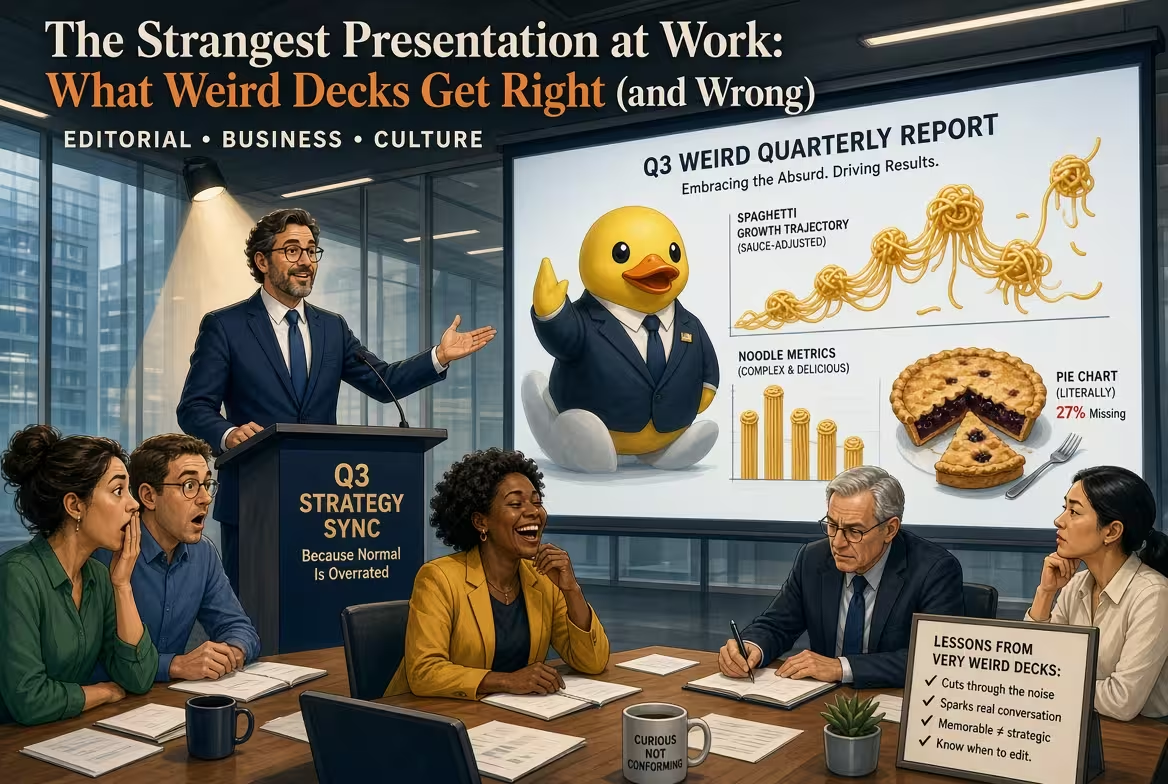
Ask a room full of coworkers to name the strangest presentation they've ever sat through, and something odd happens: half of them can describe it slide by slide, years later, while they can't tell you a single thing from last Tuesday's quarterly update. That's the part worth sitting with before we get to the stories. Weird isn't just memorable by accident.
The one everyone still brings up
Picture — hypothetically — a product roadmap presented entirely through the lens of a fantasy football draft. Each feature was a "player pick," priority was "draft order," and the Q3 risks slide was labeled "injury report." It shouldn't have worked. Half the room didn't follow football. And yet three years later, people in that company still refer to a delayed feature as "still on the bench."
I've heard versions of this story from people in totally unrelated industries — a metaphor system so specific it should have alienated half the audience, and somehow didn't. The pattern isn't the metaphor itself. It's that the presenter picked one idea and never broke character. That consistency is what separates "memorably strange" from "just confusing," and it's the same principle behind disciplined slide structure generally — commit to one system and don't dilute it halfway through.
Where strange tips into unprofessional
Not every unusual deck earns its place. There's a version of this story that goes badly: someone opens a budget review with a 90-second video clip that has nothing to do with the budget, loses the room's attention, and never gets it back. The strangeness wasn't in service of the argument — it replaced the argument.
The test I'd apply, having watched both kinds happen, isn't "is this normal." It's whether the odd choice still answers the question the audience came in with. A football-themed roadmap still tells you what's shipping and when. A random video clip usually doesn't tell you anything except that the presenter wanted a laugh. One is a communication device wearing a costume. The other is a costume with no communication underneath it.
Why the "boring" version usually isn't actually boring
Here's the complication, though, and it's one I'd expect most stories about weird presentations to skip: the strangest deck in the room is rarely the most effective one on its own. It's memorable, but memorable and useful aren't the same thing. According to a Prezi-commissioned Harris Poll survey recapped by presentation agency Ethos3, roughly 46 percent of respondents said they'd been distracted during a coworker's presentation — checking email, texting, drifting off. That's the baseline every presenter is competing against, and it's exactly why a genuinely odd approach can outperform a mediocre standard one purely on attention alone.
But attention isn't the finish line. A deck that gets remembered for being weird and forgotten for what it actually recommended has traded one problem for another. This is the argument made well in why leaders often prefer the slides designers find boring — the plain table with the clear number tends to outlast the clever concept once the meeting is over and someone actually has to act on it.
The strange ones I'd actually defend
I wouldn't recommend chasing weird for its own sake — most attempts at it read as try-hard rather than clever, and that's a worse outcome than a plain deck. But the ones worth defending share a trait: the strangeness was load-bearing. Take away the gimmick and the argument collapses, because the gimmick was the argument's structure, not decoration on top of it.
A hypothetical example: someone presenting a hiring plan as a recipe — "ingredients," "prep time," "what happens if you skip a step" — isn't being cute. If the metaphor maps cleanly onto sequencing and dependencies, it's doing real structural work a standard bullet list wouldn't do as fast. That's a genuinely different thing from a slide that's odd purely because someone got bored of the template. It also tracks with a point worth repeating from why the tool rarely causes the bad presentation — the format was never the problem, and neither is the metaphor, so long as the thinking underneath it is sound.
What this means for the next deck you build
I don't think the lesson here is "be weirder." Most workplaces have exactly enough tolerance for one unconventional presentation per quarter before it stops registering as clever and starts registering as a bit. The lesson is closer to: figure out what your strangest instinct is actually trying to communicate before you build around it. If the football metaphor, the recipe structure, the karaoke slide transitions are standing in for something the audience genuinely needed — sequencing, priority, risk, whatever it is — keep it. If they're standing in for the fact that you didn't want to write a normal slide, cut it and write the normal slide.
Next time you're in the room for one of these, it's worth noticing which kind you're watching before you decide whether to laugh or take notes. Sometimes it's both.
Comments (0)