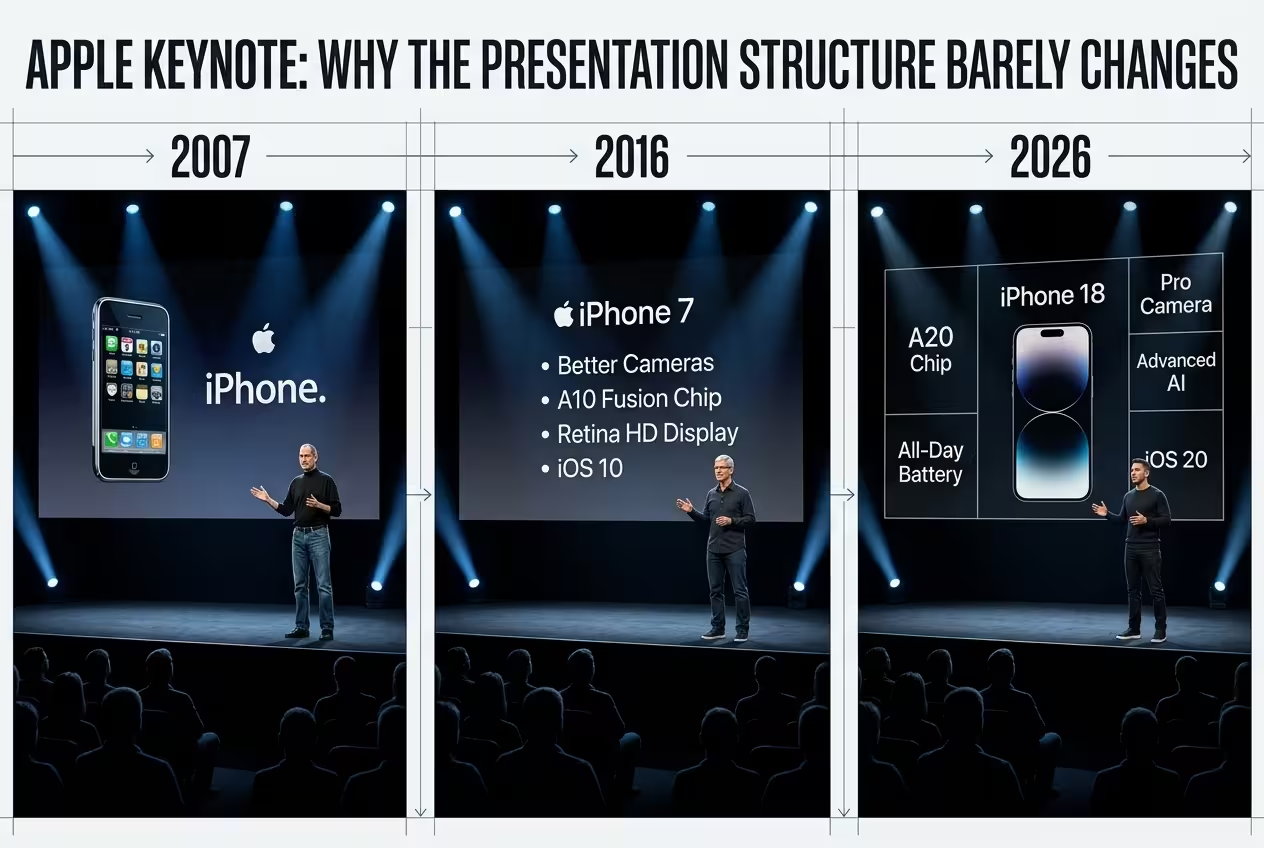
Watch the 2007 iPhone launch, then watch last year's Apple event back to back. The products, the presenter, the stage, even the length of the applause breaks are different. The shape underneath is not. Same rise, same pause before the reveal, same close. Apple has swapped out almost every visible element of its keynote over nearly two decades and left the skeleton alone.
That's the part worth examining if you sit through a lot of these events for the products, and it's also the part most "present like Steve Jobs" advice skips entirely — because that advice usually lists surface habits (no bullet points, dress simply, rehearse for weeks) rather than the underlying structure those habits sit on top of. This piece is about that structure: what it actually is, why it hasn't moved even as Apple changed presenters and product categories, and where it would fall apart if you tried to copy it somewhere it doesn't belong.
The three-act shape nobody at Apple invented
Carmine Gallo's book on Jobs' presentation style makes a specific claim: Jobs' Macworld keynotes weren't organized like a product briefing, they were organized like a three-act play — an opening that sets up a problem or a gap in the market, a middle that walks through the solution piece by piece, and a closing "one more thing" that resolves the arc. That's not an Apple invention; it's the oldest structure in dramatic writing, repurposed for a stage that happens to have a product on it instead of a plot.
What's notable isn't that Apple borrowed dramatic structure — plenty of speakers try to. It's that the borrowing survived a leadership change. Tim Cook is a fundamentally different performer than Jobs was — calmer pacing, less showmanship, fewer dramatic pauses. And yet the events he presents still open with a problem framing, move through a build, and close on a held-back reveal. The performance changed. The architecture under the performance didn't.
The spark line: why the beats matter more than the script
Presentation researcher Nancy Duarte, whose agency has worked with Apple since the late 1980s, diagrammed Jobs' 2007 iPhone announcement using what she calls a spark line — a chart that tracks, moment by moment, whether the speaker is talking about "what is" (the current, frustrating state of phones) or "what could be" (the device about to be revealed). The talk doesn't move in one direction from problem to solution. It oscillates, again and again, between the two, and each swing back to "what could be" lands a little further than the last one — until the actual reveal.
That oscillation is the mechanism, not the charisma. It's why a Steve Jobs keynote and a flatter, calmer Tim Cook keynote can both work: the rhythm of tension and release is doing the persuasive work, and a presenter's delivery style only changes how loud each beat lands, not whether the beat is there. This is the same principle a consulting firm's slide system relies on when it writes the argument before touching layout — the sequence of claims carries the persuasion, and the visual polish sits on top of a structure that was already sound.
What actually changes from keynote to keynote
Products change. Runtime changes — some events run ninety minutes, some run over two hours. The visual language changes with every hardware refresh cycle. Even the number of presenters on stage has grown, since Apple now spreads segments across multiple executives instead of one person holding the whole show.
None of that touches the skeleton. Every segment, regardless of who delivers it, still opens with a problem or a limitation in the current product line before introducing what replaces it. The "one more thing" close — or its modern equivalent, a held-back reveal near the end — still shows up when Apple has something it wants to land as a surprise rather than announce as a line item. The structural decisions were made once, a long time ago, and every keynote since has been new content poured into that same container.
Why the format doesn't get touched, even under pressure to modernize
It would be easy to assume Apple keeps the format out of tradition or risk-aversion. The more useful explanation is that a fixed structure is what makes a two-hour show plannable at all. If the narrative shape were reinvented every year, every planning cycle would start by arguing about structure before anyone could argue about content — and that argument would eat the rehearsal time the actual delivery depends on. The polish people read as effortless is usually the output of a lot of paid-for iteration, and iteration is only affordable when it's spent refining execution inside a known shape, not relitigating the shape itself every single time.
This is also where the format has a real boundary. A three-act reveal structure works because Apple is building toward a single unveiled thing the audience doesn't have yet — that's what the "what could be" swings are pointing at. It stops working the moment there's no reveal to build toward: a quarterly internal update, a status report, a classroom lecture. Force a Jobs-style withheld climax onto a meeting where everyone already knows the numbers, and you've just added suspense nobody asked for around information that isn't suspenseful. The structure is specific to persuasion-toward-a-reveal, not a general-purpose template for every kind of talk.
Borrowing the skeleton without pretending you're launching a phone
What actually transfers to a normal business deck isn't the theatrics — it's the discipline of separating the shape from the content. Decide, before you touch a single slide, where your "what is" beats sit and where your "what could be" beats sit, and make sure they alternate instead of front-loading every problem before every solution. Hold back one thing worth holding back, if you genuinely have one — and skip it entirely if you don't, because a forced reveal reads as gimmicky the moment the audience senses there's nothing behind the pause.
A deck that's already built around that alternating rhythm, rather than a blank slide-by-slide outline, makes the discipline easier to keep under a deadline — which is really what a Keynote template built for staged product or launch narratives is doing structurally, whether or not the person using it ever puts a word to it. The next time you sit through an Apple event, try watching it as a spark line instead of a product announcement — the reveal is rarely the most interesting part. The rhythm getting you there is.
Comments (0)