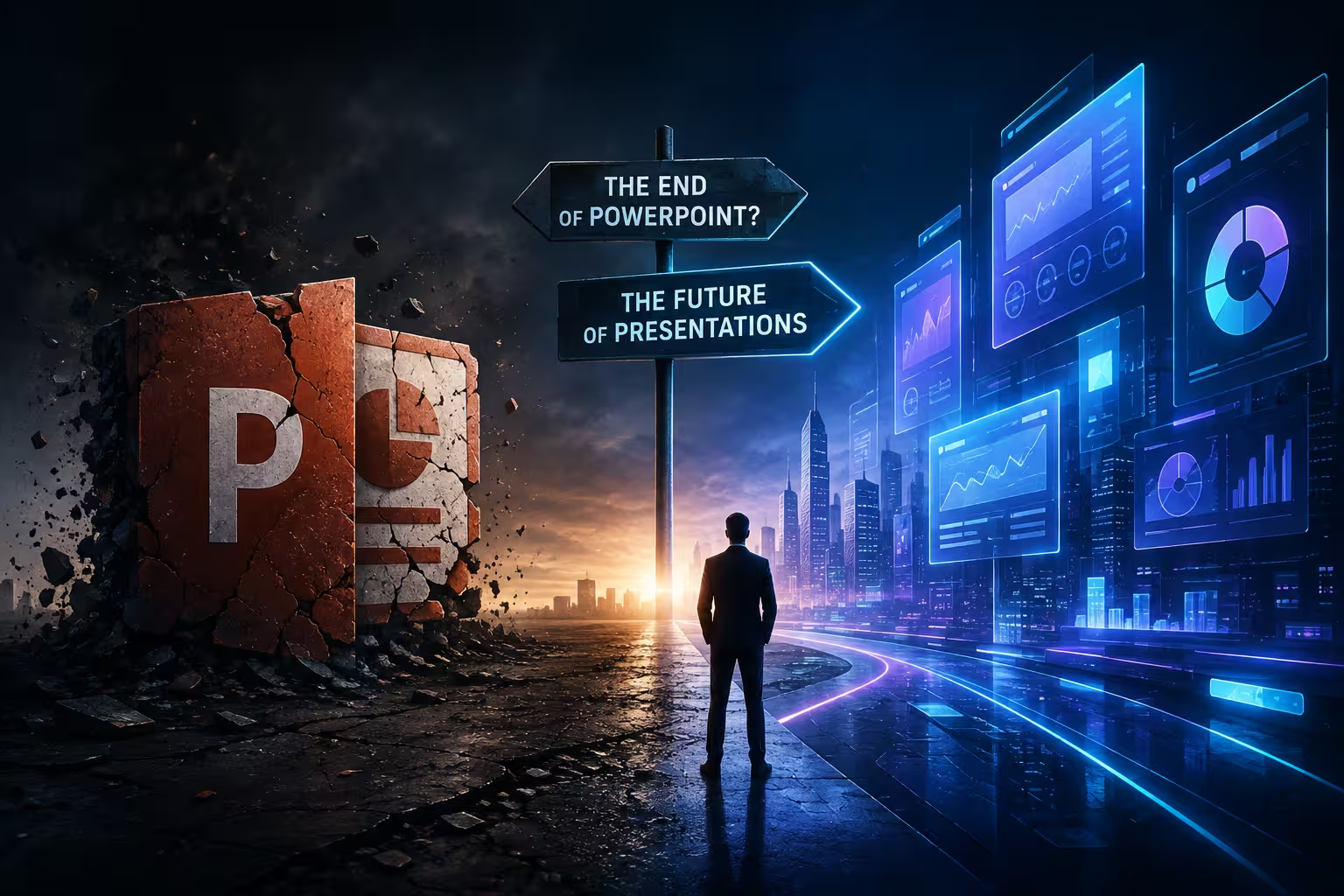
Somewhere in a Slack channel right now, someone is sharing a 60-second AI-generated deck and typing "RIP PowerPoint" underneath it. This has happened before — with Prezi, with Google Slides, with Keynote — and PowerPoint outlived all of those obituaries. So why does this round feel different, and is it actually?
The Same Prediction, Different Decade
I've watched this cycle at least three times now. A new format shows up, early adopters get loud about it, and for about eighteen months every conference panel asks "is this the end of PowerPoint." Prezi's zooming canvas was supposed to make slides feel dated. Google Slides was supposed to win on collaboration. Neither did — not because they were bad products, but because "kill PowerPoint" was never really the job to be done. Companies didn't standardize on .pptx because they loved the software. They standardized on it because everyone else already had.
That's the part AI tools run into first. A generated deck that looks sharp in a demo still has to survive being emailed to twelve people, edited by three of them, and rebranded to match a template nobody in the room designed. The way business presentation culture has shifted over the last few years matters more here than any single tool's feature list.
What AI Actually Automates — and What It Doesn't
Here's a number worth sitting with: a GfK-commissioned study found that of roughly 20 hours a month employees spend working in PowerPoint, about 8 hours go into repetitive steps — resizing, realigning, fixing fonts, matching colors. That's the layer AI tools are genuinely good at removing. Feed a prompt in, get a formatted deck out, skip the fiddly part.
What that number doesn't capture is the other 12 hours. Deciding which three numbers matter out of forty on a spreadsheet. Figuring out that the CFO will push back on slide 6 before she even opens it. Sequencing an argument so the room agrees with the ask by the time it's actually made. None of that is a formatting problem, which means none of it goes away just because formatting got automated. AI compresses the mechanical half of deck-building; it hasn't touched the judgment half at all — and that's the half that actually takes the hours nobody complains about publicly.
The Governance Problem Nobody's Marketing Around
This is the part that gets skipped in most "AI vs PowerPoint" pieces, and it's the strongest argument against a 2030 death date. Enterprises are starting to restrict AI-generated slides in exactly the settings where PowerPoint has always been strongest: board meetings, investor updates, regulated reporting. Some companies are actively cracking down on AI-generated slides in the boardroom — not because the output looks bad, but because nobody can trace where a number on slide 4 actually came from. That's a governance failure, not a design one, and it's much harder to fix with a better model. A file format that plugs into version control, approval workflows, and audit trails has a structural advantage that a slicker interface can't out-compete. Templafy, which builds AI tooling that works inside Microsoft 365 rather than around it, has made roughly this same case: the problem was never PowerPoint, it was ungoverned use of PowerPoint — and an ungoverned AI layer just scales the same problem faster.
Microsoft Isn't Standing Still, Which Changes the Math
It's easy to frame this as scrappy AI startups versus a legacy incumbent, but that framing ignores who actually owns the format. Microsoft has been folding Copilot-style generation directly into PowerPoint rather than watching from the sidelines. That flips the competitive question: instead of "will an outside tool replace PowerPoint," it becomes "will PowerPoint's own AI layer be good enough that switching stops making sense at all."
I wouldn't bet against distribution here. A feature bundled into software 400+ million people already have installed beats a separate tool requiring a separate login, even when the separate tool is objectively sharper on day one. That's not a defense of PowerPoint's design — plenty of its habits deserve criticism — it's just how enterprise software adoption tends to actually play out.
So What Actually Happens by 2030?
Not extinction — a quieter shift in who's doing the typing. The .pptx file format almost certainly survives as the interoperability layer everyone's tools export to and import from, the same way .docx survived Google Docs. What's more likely to change is the authoring step: fewer people manually placing text boxes, more people prompting an AI agent and then editing the argument, not the alignment. Some leadership teams are already skipping the slide step entirely for routine updates, which says more about meeting culture than about the software itself.
If you're building decks for a living, the practical move isn't picking a side in the "PowerPoint vs AI" fight. It's getting comfortable treating AI as the fast first draft and spending the time you save on the argument the slide is supposed to be making — because that's the one part of the job nothing so far has managed to automate.
Comments (0)