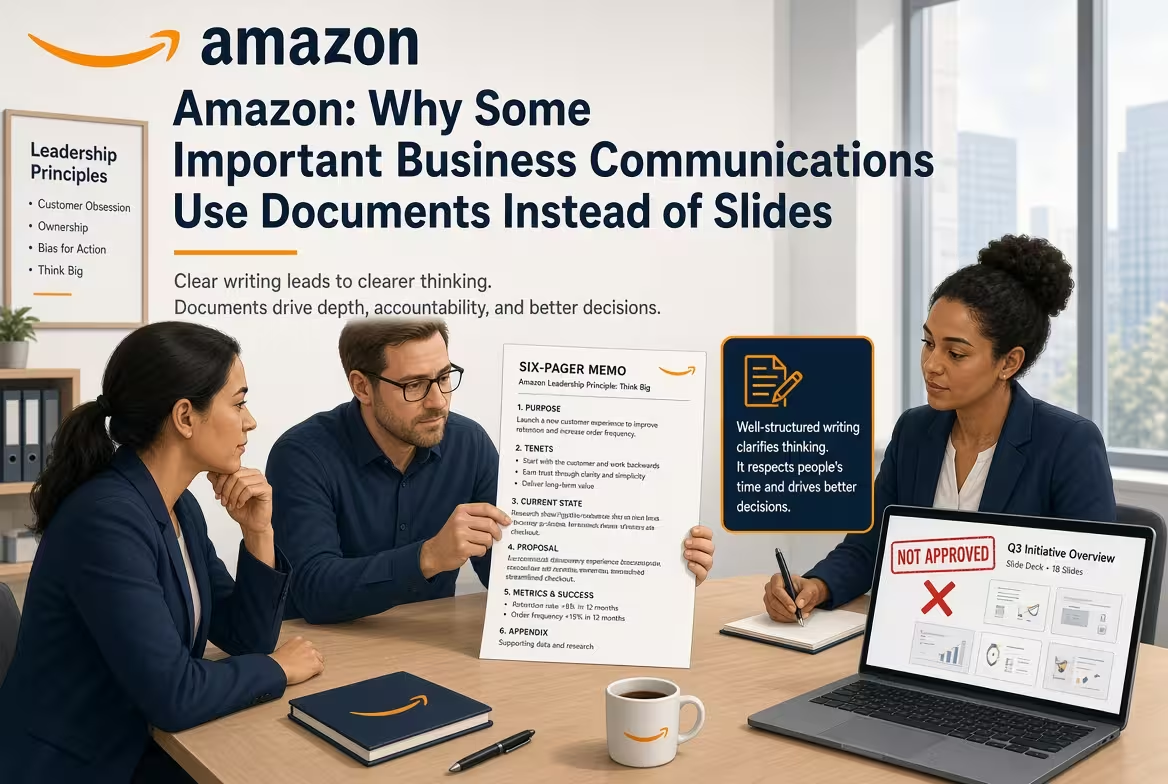
At Amazon, a room full of senior executives will sit in total silence for twenty minutes before a major decision gets discussed. No one presents. No one clicks to the next slide. Everyone just reads the same six-page document, start to finish, and then the conversation begins. It's a strange thing to picture in a culture obsessed with speed — and it's the opposite of how almost every other company runs its important meetings.
This isn't really a story about PowerPoint. It's about a specific kind of business communication — the one where a decision with real consequences hangs on whether the reasoning holds up — and why that kind of communication tends to break down in slide format no matter how well the slides are designed.
What a bullet point hides that a sentence can't
Jeff Bezos has made the case bluntly over the years: a traditional slide presentation is easy for the presenter and hard for the audience, because it compresses an argument into fragments and leaves the connective reasoning to be filled in live, in the room, usually by the person who already knows the answer. A six-page narrative memo, structured as prose rather than bullets, forces the writer to actually complete the argument before anyone else sees it — which means gaps in the logic show up on the page instead of in the meeting.
I've watched this play out with less famous examples than Amazon's. A budget request built as twelve slides can look confident and still hide the exact question a CFO needs answered — because the slide format never demanded that anyone write the sentence connecting cause to effect. Put the same content in three paragraphs and the missing link is suddenly visible, often to the person who wrote it.
Why Amazon's fix wouldn't survive being copied wholesale
Here's where most retellings of the six-page memo stop, and where the more useful part starts. Amazon's practice isn't just "write it instead of slide it" — it comes with scaffolding most companies don't bother to build. The memos are drafted over days, not hours, circulated for editing before the meeting, and read in silence so that everyone starts the discussion from the same information rather than whatever the fastest reader skimmed. Strip out that scaffolding — tell a team to "just write it up" the night before a meeting with no review cycle and no reading time — and you get a long document with the same unfinished reasoning a bad deck would have had, just with more words to hide it in.
That's the trade-off worth sitting with before adopting this format: a document only forces clearer thinking if the writer is actually held to finishing the argument. Otherwise it's just a slower way to be vague.
A rough test for choosing between the two
The useful distinction isn't "important vs. unimportant" — plenty of important communications are genuinely well served by slides. It's closer to this: does the communication need to persuade someone that a chain of reasoning is sound, or does it need to show someone what something looks like or where things currently stand?
- A decision with real trade-offs and a "why" that has to survive scrutiny (a pricing change, a market entry, a reorg) leans document — the reasoning needs to be inspectable, not narrated.
- A status update, a visual comparison, or anything meant to be scanned rather than argued (a quarterly metrics review, a design walkthrough, a sales pitch with a live presenter) leans slides — the format's compression is the point, not the problem.
- A hybrid case — walking a room through a proposal where you'll also be in the room to answer questions live — is where a deck still earns its place, because the presenter is there to supply the connective reasoning the slides leave out.
Put another way: slides work when a person is present to do the explaining. Documents work when the explaining has to survive without you in the room — sent ahead, forwarded, read by someone who'll never hear you talk through it.
When the answer is still slides
Most day-to-day business communication is exactly the kind slides are built for — a presenter in the room, a visual comparison, a story that benefits from pacing rather than density. The mistake isn't using slides; it's using slide-shaped thinking for the handful of communications each quarter that actually need the other kind — the ones where getting the reasoning right matters more than getting the format right. For that everyday slide work, a well-structured template still saves the hours that should be going into the content rather than the layout, which is exactly the gap ImagineLayout's presentation templates are built to close.
Before the next high-stakes meeting, it's worth asking which kind of communication you're actually building — and whether the format you reached for out of habit is the one the argument needs.
Comments (0)