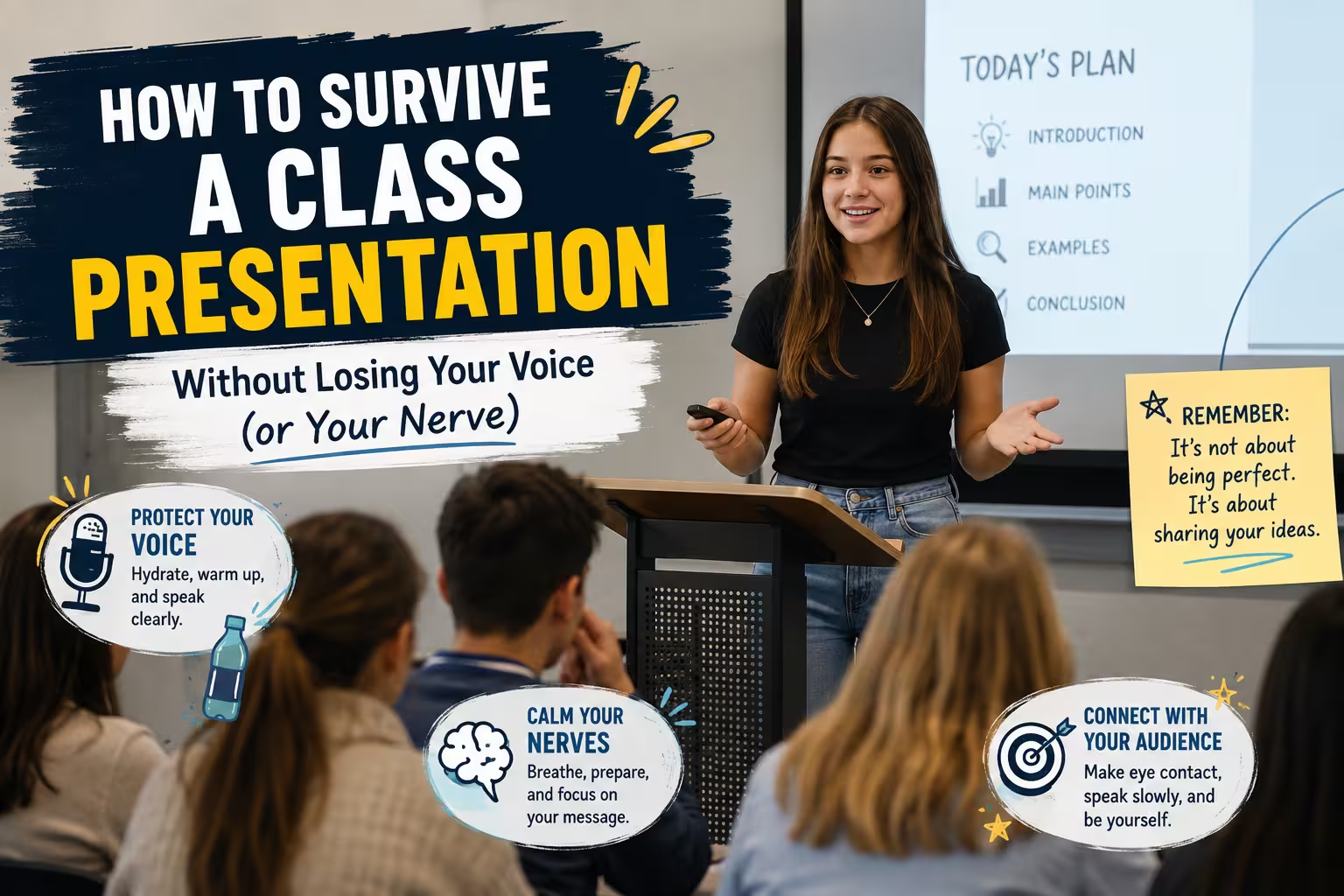
Here's the part nobody tells you before your first big class presentation: the fear doesn't go away once you know the material. Plenty of students walk in having read the source text three times, rehearsed the opening line in the mirror, and still feel their voice crack on slide two. If knowing the content isn't what settles the nerves, something else is doing the damage — and it's usually the way the talk was built, not the person giving it.
A Current Psychology review of demographic predictors of speaking anxiety among university students cites earlier US research finding that roughly six in ten college students report fear specifically tied to public speaking, with UK surveys putting the number for oral presentations even higher. That's not a small anxious minority — it's most of the room. Which means the standard advice ("just relax," "picture the audience in their underwear") was never going to work at that scale. It's advice for an outlier, applied to a majority.
The slide deck is usually the real problem, not the audience
I've watched a lot of student presentations fall apart in the same specific way: the student wrote their script first, then built slides to match it, then stood up and tried to deliver both from memory at once. That's three cognitive tasks running simultaneously — recall the script, track the slide, project confidence — and the moment one slips, all three wobble.
The fix isn't "be more confident." It's building the deck so it carries part of the cognitive load for you. A slide with one strong visual and three words does more to anchor your memory than a slide with six bullet points you're secretly trying to read off. If you're assembling this for a class assignment, starting from a structured layout rather than a blank slide — something like a lesson-plan style Keynote template — removes the temptation to cram text onto every slide, because the layout itself doesn't leave room for it.
This works right up until the topic genuinely needs a data point or a comparison the audience has to see, not hear. In that one case, don't fight the slide's natural size limit — use a proper chart instead of a paragraph, even a simple one.
Cue cards beat a memorized script — but only if you build them wrong on purpose
Everyone tells students to use cue cards instead of a full script. Fewer people explain that most students write cue cards that are just the script in smaller handwriting, which defeats the point entirely — you end up reading a tiny script instead of a normal-sized one.
A cue card should contain almost nothing: three or four words per point, arranged as a sequence, not a sentence. The test I use: if you can't glance at the card for half a second and immediately know what comes next, it has too much on it. Sparse cards force you to actually know the material in your own words, which is slower to prepare but far harder to lose your place in.
What to actually do when your mind goes blank mid-sentence
This is the moment most guides skip, probably because it's uncomfortable to plan for. But it happens to almost everyone at some point, and the difference between a recoverable blank and a visible meltdown usually comes down to one thing: what you do in the first three seconds.
Don't apologize out loud, and don't try to jump ahead to a part you do remember — both signal panic to the room and make it harder to think clearly yourself. Instead, pause, look at your slide or cue card, and restate the last full sentence you said, slightly rephrased. It buys you two or three seconds of thinking time disguised as a natural pause, and audiences read a short silence as composure far more often than students expect.
Rehearsal has a point of diminishing returns, and most students blow past it
More practice sounds like it should always help, and up to a point it does — but somewhere around the fifth or sixth full run-through, something shifts. The talk stops being something you understand and starts being something you've memorized as a sound pattern. The problem shows up the moment anything interrupts that pattern: a question, a slide that loads slowly, someone coughing. Over-rehearsed students often struggle harder to recover than under-rehearsed ones, because they were never actually thinking through the content — they were reciting it.
Three to four full run-throughs, with at least one done out loud in front of another person, tends to be the point where delivery is smooth but still flexible. If you want the last rehearsal to also double-check your visuals actually communicate what you think they do, a quick pass through a clean, uncluttered Keynote template beforehand can save you from discovering a confusing slide layout in front of the class instead of the night before.
The audience is thinking about the presentation far less than you are
This isn't a comforting platitude — it's just how attention works in a room where twenty other students are also waiting for their turn, half-reviewing their own notes, or thinking about the assignment due after. The scrutiny you feel is mostly self-generated, aimed inward, not actually coming from twenty pairs of judging eyes.
So the real question isn't how to eliminate the nerves before you stand up — the survey numbers above suggest most of the room wouldn't manage that either. It's whether the talk you built can survive a shaky first thirty seconds without falling apart. Build it so it can, and the nerves stop being the thing that decides how it goes.
Comments (0)