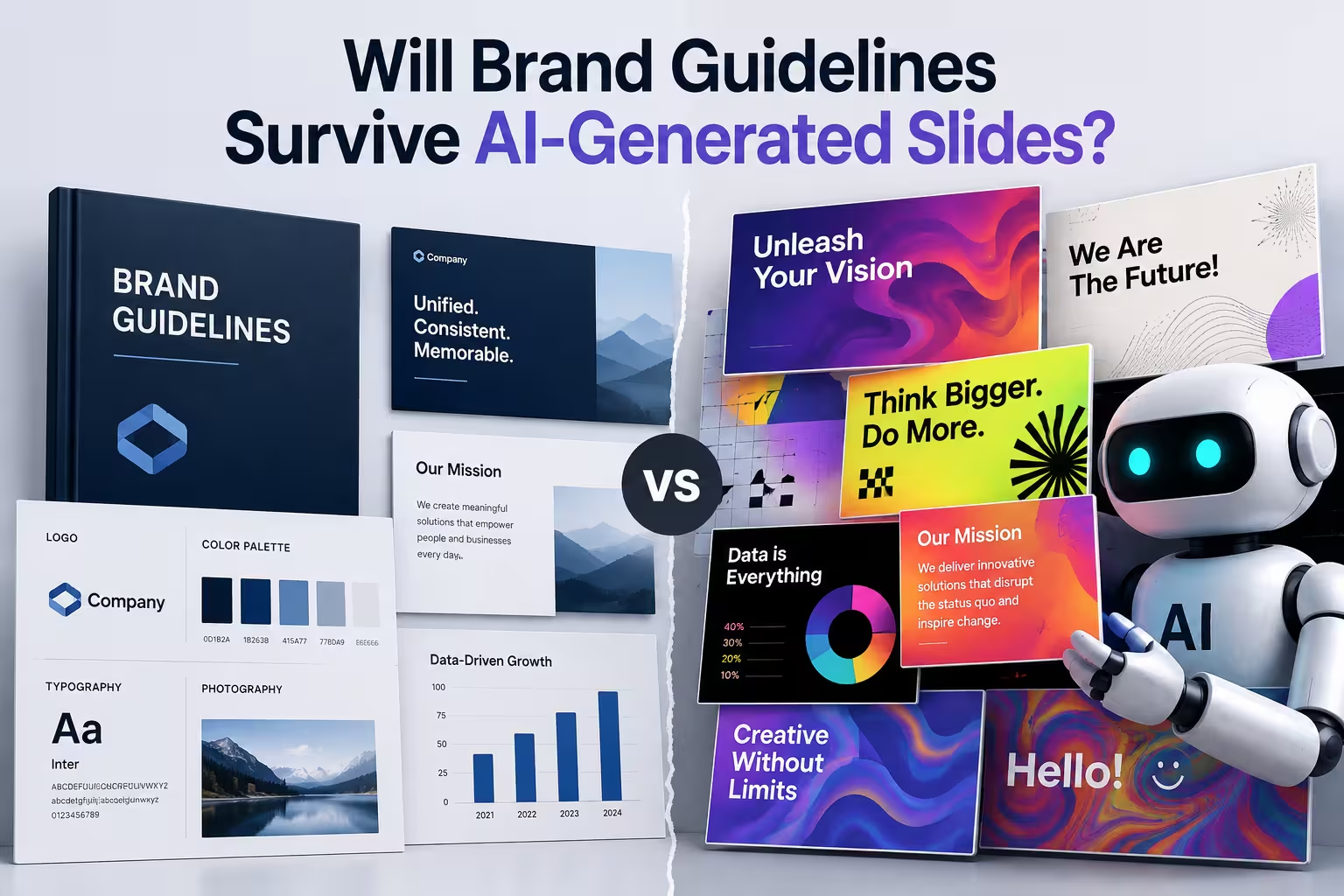
A junior analyst opens a prompt box, types three sentences, and has a twelve-slide deck before her coffee cools. No template folder. No design review. No email to the brand team asking which blue is "the" blue. If you'd described this workflow to a brand manager five years ago, the obvious question would have been: what happens to the guidelines nobody's checking anymore?
The strange answer is that most decks weren't checked against guidelines even before AI showed up. empower's Global PowerPoint Study, based on GfK research across hundreds of companies, found that employees lose roughly 37% of their total PowerPoint time to formatting — adjusting colors, fixing fonts, wrestling layouts into shape — and that almost everyone surveyed (96%) considers design compliance important, with 86% saying they're familiar with their company's corporate design rules. Knowing the rules and following them turned out to be two different things. The gap wasn't awareness. It was that compliance depended entirely on an individual's patience at 6pm before a client call.
AI didn't create the brand-drift problem — it just made it visible faster
I've watched this play out with client decks long before "AI slide generator" was a category: someone grabs an old file because it's close enough, keeps the fonts from three reorganizations ago, and nobody notices until the deck is on a projector. That's brand drift. It's slow, it's manual, and it hides well because each individual deck looks fine in isolation.
What changes with generation tools is speed, not root cause. A prompt-to-slide tool that ignores your brand kit produces the same problem an untrained new hire produces — just in ninety seconds instead of two hours. In its 2026 test of seventeen AI presentation makers, Alai's team reported that two of the tools tested simply disregarded the supplied brand colors and built their own deck instead. That's not a sign guidelines are becoming irrelevant. It's the same failure mode brand teams have always fought, now running at generation speed.
Where the guideline actually lives is what's shifting
Here's the part that's genuinely new, and it's easy to miss if you're only watching for "is the deck on-brand or not." Traditionally, a brand guideline was a PDF someone consulted — or didn't — while building a slide by hand. The compliance check happened after the work, usually during review, which is exactly why so many decks slipped through.
AI tools that handle brand consistency well don't check after the fact. They apply the brand kit as a constraint at generation time: colors, type, logo placement locked before the first slide renders, the same way a well-built template with in-built slide masters propagates a color change across every slide the moment you edit the master. The guideline stops being a document people are supposed to remember and becomes a configuration the tool can't skip. That's a real improvement for the boring 80% of decks — quarterly updates, internal reports, sales one-pagers — where nobody was ever going to open the brand PDF anyway.
It's worth sitting with that distinction for a second, because it reframes the whole question. The guideline isn't disappearing. The document is. What survives is the constraint — just moved upstream, from "please remember this" to "the system won't let you forget it."
The 20% where it still breaks, and why that matters more than it sounds
Multiple 2026 head-to-head tests of AI presentation tools flag the same weak spot: nested elements. Charts, callout boxes, and layered graphics are where brand-kit adherence gets inconsistent even in tools that nail flat title-and-bullet slides. A locked color palette applies cleanly to a text box. It gets messier inside a stacked bar chart with a legend, or a comparison table with conditional shading — exactly the slide types that carry the most information density and the most scrutiny in an investor deck or a board update.
This is where I'd push back on the "AI solves brand consistency" framing you'll see in most vendor blogs. It solves the easy 80% reliably. The remaining slides are the ones a human still needs to eyeball — not because the guideline failed, but because pattern-matching brand rules onto structurally complex layouts is a harder problem than applying them to a title slide. A firm that swaps its color scheme mid-quarter, the way consulting teams building on structured template frameworks often do around proprietary methodology slides, still needs someone checking that the update actually reached every chart and not just the cover page.
What this means for the brand team's actual job
The Prezi-based survey cited in 2Slides' 2026 assessment of AI presentation quality found something that lines up with all of this: 91% of presenters feel more confident walking into a room with well-designed slides, but only 31% believed their own slides met that bar. That 60-point gap is the entire market for both AI presentation tools and brand governance — people know good design matters and can't reliably produce it themselves.
AI closes that gap for a lot of people, which sounds like it should shrink the brand team's job. In practice it relocates it. Less time spent policing individual decks after the fact, more time spent building and maintaining the brand kit that generation tools actually read — which colors are locked versus adjustable, which layouts are approved for charts, what happens to the logo when a slide goes dark-mode. Guidelines that used to live as static PDFs need to become structured enough for software to enforce them, not just readable enough for a human to skim before a deadline.
So no, brand guidelines aren't disappearing when everyone can generate their own slides. What's disappearing is the assumption that a guideline only works if a person remembers to open it.
Comments (0)